Adoption Over Hype: What Actually Drives Growth in Wealth Management with Scott Smith
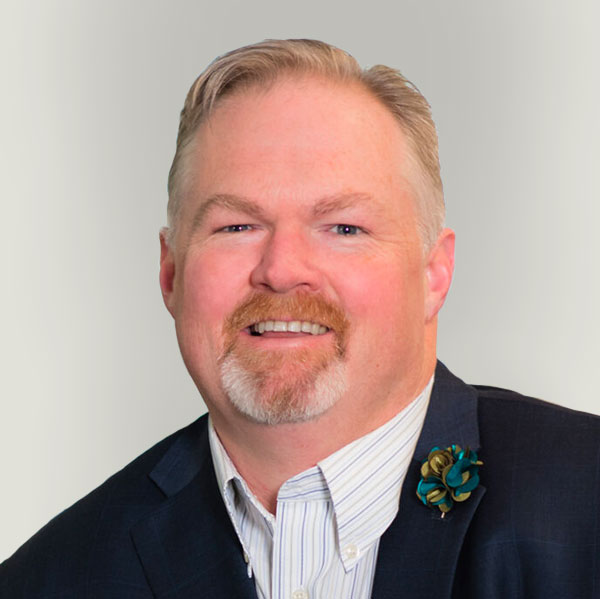
This week, Jack Sharry talks with Scott Smith, Senior Director of Advice Relationships at Cerulli Associates. Scott leads research on financial advisor trends, client engagement, and the evolving wealth management landscape. In his role, Scott works closely with wealth management firms across the industry, helping them understand advisor behavior, emerging technology adoption, and the strategic forces shaping the future of advice.
Scott talks with Jack about the trends that actually drive growth in wealth management: organic growth, tax optimization, alternatives, AI, and Unified Managed Households (UMH). He also discusses the factors that affect clients’ financial decisions and why the secret to winning the next decade is not about having the fl ashiest tech, but about creating the path of least resistance for advisors and clients alike.
What Scott has to say
“AI does a great job solving logic and algorithms. But in wealth management, clients are almost 90% emotionally based. It’s all about how they feel about money and their goals. People are not going to share their emotions with a machine.”
Read the full transcript
Jack Sharry: Hello everyone, and thanks for joining us for this week’s edition of WealthTech on Deck. It seems that everyone I speak with lately is fixated on at least one of the following: organic growth, tax optimization, alternatives or private investments, artificial intelligence, unified managed households—or all of the above. That’s exactly what we’re going to talk about today: all of the above. We’re joined by someone who speaks with as many—if not more—people across the industry as I do. Please welcome Scott Smith back to WealthTech on Deck. My father used to call me the eyes and ears of the world, always curious about what others were thinking and saying. Scott is all that and more. He talks with executives across the industry about what’s happening now and where we’re headed. is Director of Advice Relationships, where he leads research on financial advisor trends, client engagement, and the evolving wealth management landscape. He provides strategic insights that help firms enhance advisor productivity and client outcomes. Scott, welcome back to the podcast. It’s great to have you here.
Scott Smith: Thanks, Jack. Always great to join you.
Jack Sharry: So Scott, is my analysis accurate—A, B, C, D, E, or F, meaning all of the above? What are you hearing, and how do you prioritize all of these things firms are working on?
Scott Smith: It’s definitely all of the above. What I’m hearing right now feels like a mad dash across the industry to make sure no one falls behind. But in many cases, it’s “ready, shoot, aim.” Firms are adding alternatives, private investments, and AI to workflows without first identifying the problem they’re trying to solve. AI is a great example—both artificial intelligence and alternative investments are solutions still looking for clearly defined problems. The wealth management industry has operated pretty smoothly over the past decade. Expenses are relatively low, operations run well, and yet we expect AI to come in and disrupt everything overnight. I’m not convinced that’s how it plays out. There’s a lot of talk about transformation and disruption, but often there’s more smoke than fire. Press releases come out before there are real results. People ask me, “What are they doing over there?” And the honest answer is often, “They put out a press release.” That’s becoming a boy-who-cried-wolf problem. I remember a training class back in 2006 at MFS where a speaker taught us that every message needs to answer two questions: “So what?” and “Who cares?” Those questions still matter. We see press releases filled with buzzwords—transformational, disruptive, client-experience-enhancing—but no substance behind them yet.
Jack Sharry: That really resonates. As we record this in the third week of February, the recent news around Altruist and Holistiplan is a good example. A tax planning tool triggers a significant market reaction, and suddenly everyone’s asking, “What did we miss?” Walk us through how you see that.
Scott Smith: As soon as I heard the news, I went to their website to understand what was actually there. It was essentially “sign up for a demo in two weeks.” If analysts are downgrading major broker-dealers based on three lines in a press release promising better tax outcomes, that suggests we’re overreacting. That said, it does confirm something important: people want better outcomes. When we survey affluent investors, the top priorities are reducing taxes and simplifying their financial lives. If you can deliver those outcomes in a clear, customized way, that’s what clients care about. But we still need to see how adoption plays out and what real results look like.
Jack Sharry: Let’s go back to our ABCDEF list. How do you prioritize all of this?
Scott Smith: My preference is to focus on tangible improvements along the path of least resistance. Adoption is the biggest challenge with any new technology. Changing advisor behavior isn’t easy, so the new way has to be clearly easier and obviously better than the old way. For me, the two biggest priorities are organic growth and tax optimization, including unified managed households. Are you bringing me new clients, or are you saving my clients money? Those are immediate, visible benefits. If a tax optimization program generates a tax loss that saves a client $1,000 and the advisor can show and explain that clearly, that’s real value. Compare that to replacing a large-cap value fund with private equity—it might be better long term, but the benefit is harder to explain and less tangible in the short term. If training is a core part of your go-to-market strategy, you’re already in trouble. We’ve heard for decades that education alone will change behavior. It hasn’t. Alternatives might have doubled as a percentage of portfolios over the years, but that’s still only from two percent to four percent.
Jack Sharry: You’re making an important point—make it easy to do the right thing. How do firms react when you tell them this?
Scott Smith: I lead with this in almost every presentation because it’s that important. Think about your own life. How much time did you spend reading your iPhone instruction manual? None. You opened it, and it worked. If you want people to learn something entirely new, it has to be dramatically better and extremely intuitive. Otherwise, it’s not going to happen. Advisors already have plenty of hard work to do. They’re not going to spend hours learning something that might improve outcomes five years from now.
Jack Sharry: That’s a great segue into unified managed households. UMH is complex by nature. What does it really mean, and where do you see it going?
Scott Smith: You’ll hear different definitions depending on the firm, but we identified eight core capabilities, ranging from financial planning and transition management to asset location and tax-smart distributions. Not every firm needs all eight immediately. The right starting point depends on where the pain is. If a firm is gathering assets rapidly, transition management is critical. Clients don’t want a massive tax bill the moment they move assets. Asset location is another example. It has clear, tangible benefits, but historically it’s been ignored because it felt too complex. If the system handles the optimization automatically, the advisor’s job is simply to explain why it happened. That’s a huge shift. Instead of paying $150,000 in taxes upfront, maybe it’s $8,000 a year over time. That’s meaningful to clients.
Jack Sharry: What I’m hearing is that firms should start with the problem they’re trying to solve—whether that’s tax optimization, liquidity, or transition management—and build from there.
Scott Smith: Exactly. Everyone’s priorities are shaped by their experience and their client base. Clients don’t care how elegant your operations are; they care that their problems are solved. Wealth management is deeply emotional. You can optimize a portfolio, but it still has to feel right to the client. That’s where the human element remains essential. AI is great at logic and algorithms, but clients aren’t purely logical. They want trust, reassurance, and perspective—especially as their priorities change over time.
Jack Sharry: As we wrap up, any final thoughts?
Scott Smith: It comes back to identifying the goal and making it easier to do the right thing. We’ve gone all in on AI, but forcing a use case where there isn’t a problem yet may not be the best strategy, at least on the client-facing side. The human experience will continue to be the premium offering in wealth management.
Jack Sharry: Before we close, what do you do outside of work that might surprise people?
Scott Smith: Lately, I’ve been doing what I call “deer hikes.” I live near federal forest land, and after heavy snowfall, I follow deer tracks to see how they move, where they rest, and how they live. It’s a great way to connect with nature—though I recently discovered coyotes were following my trail, which made things a little less comfortable.
Jack Sharry: That’s fantastic. Scott, as always, it’s been a pleasure. Thanks so much for joining us. To our listeners, thanks for tuning in. If you enjoyed the episode, please rate, review, subscribe, and share WealthTech on Deck. Visit wealthtechondeck.com for all episodes, blogs, and curated industry content.