Integrating Fee-Based Annuities into Household Wealth Management with David Lau
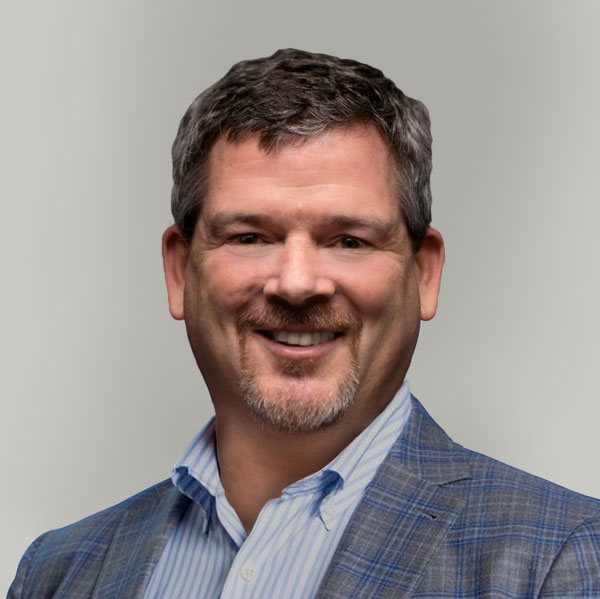
This week, Jack Sharry talks with David Lau, Founder & CEO at DPL Financial Partners. David is an innovator and disruptor in the financial services industry and one of the pioneers in fee-based annuities and in making annuities more accessible. His firm focuses on integrating innovative insurance products into a fee-based advisory practice, helping advisors deliver greater value and better outcomes for investors through transparent, cost-effective solutions.
David and Jack explore the transformation underway in how advisors integrate annuities into a fee-based, household-level practice. They discuss why commission-based annuities are giving way to low-cost, fee-based structures, how technology is making annuity analysis scalable across entire books of business, and why asset location within a household — including tax deferral through investment-only variable annuities — is the clearest path to better client outcomes.
What David has to say
“We build technology that commoditizes annuity knowledge. So now you don’t need to be an advisor trying to figure out which annuity is best or which will suit your client. You just tell us about the client, and we give you the best annuity.”
Read the full transcript
Jack Sharry: Hello everyone, thanks for joining us on this edition of WealthTech on Deck, our weekly podcast all about how technology and human beings are transforming financial advice. As we record episodes early in 2026, we are following a theme, something I call convergence. What do we mean by that? Here’s some things I’ve been noticing that are increasingly converging, some for a long time, others more recently. Let’s check out a few. Human and digital advice has been converging, seems like forever, certainly for a long time. And I believe it will only accelerate in the coming year. Of course, that is the combination of leveraging AI, which is everywhere, working to be more personal in terms of the client relationships. I think that’s the key to AI is it increases capacity, but ultimately it’s about having a tighter relationship, a better understanding of the client. Public and private investments and models are in the industry news every day. Everybody’s partnering with somebody or another. We’ll talk a little bit about that. Coordinating taxable and tax-qualified accounts to improve after-tax outcomes has been critical. Single account management, morphing to multi-account and product management is underway. Wealth management and workplace retirement are converging. Then there’s the convergence of technology, operational efficiency, investments, and product types. I could go on, but you get the point. My prediction is that you’re going to see a lot more convergence happening across our industry this year. I share this because there is another convergence that is underway and it has been led in a very positive way by my friend David Lau, founder and CEO of DPL Financial. David is one of the pioneers in fee-based annuities and in making annuities more accessible. His firm focuses on integrating innovative insurance products into fee-based advisory practices, helping advisors deliver greater value and better outcomes for investors through transparent, cost-effective solutions. DPL has redefined annuities by removing commissions, making them transparent and easy to use to empower better financial results for advisors and their clients. Today, we’re going to catch up with David, see what he’s working on these days. David, welcome back to WealthTech on Deck. Thanks for joining us.
David Lau: Great to see you, Jack. Always enjoy the conversation.
Jack Sharry: Yeah, I think we’ll have another good one. Here goes. So David, let’s start with you telling us the projects you’re working on presently. You always have a bunch going on. So, fill us in, what are you working on?
David Lau: Yeah, well, convergence, I mean, I think it’s such a good theme and a lot of what we do is involved around convergence because the world is converging in so many different ways. You know, from, you started out talking about convergence of advice, human and digital and we do a little bit of that as well, like empowering advisors to make better advice by leveraging technology. Right? So you do it with tax efficiency and income and things within LifeYield and the SEI world. And we do it around annuities so that we build technology that basically has commoditized annuity knowledge. So now you don’t need to be an advisor trying to figure out what’s the best annuity or which annuity will best suit my client. You just tell us about the client, we give you the best annuity. Because we’ll compare it against thousands of annuities and that just empowers you to give better advice and easier, better advice. And that’s kind of a convergence. And that’s something we work on all the time. But one of the big ones that we’re working on that expands that is to take it from the individual client to the book. So we’ve had the ability to look at an annuity or look at a client and make a recommendation, whether your client owns an existing annuity that was commission-based, and now we’ve got fee-based products that are so much cheaper. They’re 80% cheaper than the commission product. We can generally find a better performing product because we’re cutting so much of the cost out. We’ve been able to do that on the individual basis for a while now. And what we’ve now found as we continue to work with larger and larger firms is they want to do it on books. It’s like we used to be a commissioned annuity group and now we’ve gone mostly RIA and we’re fee based in everything else we do. And we’d love to be fee based on the commission on the annuity side. And so we can support them obviously using fee based annuities going forward, but they also want to take that old book and convert it into fee based products. So they can get rid of trails, get rid of commissions, drop their FINRA licensing. So last year we took our ability to do that on an individual basis to the book basis. Now you can give us thousands of annuities downloaded into a spreadsheet and we’ll analyze them at scale. And that’s really important for firms who are acquiring other firms and trying to go fee based. And it’s economically important too because one, the client’s getting a much better product. The firm is getting more and better revenue. They may not be getting any revenue at all if they took the commission all up front or they’re getting a small trail. Now we’re turning that into billable AUM revenue. So they’re not only going to get more revenue, they’re going to get multiples of value on that revenue as private equity has been in the space in a big fashion. So you guys had just acquired Stratos at SEI and that’s one of the things we’re exploring with SEI and Stratos is looking at the ability to support them with fee-based annuities in a number of different ways.
Jack Sharry: So let’s dig in here a little bit, because I very much understand what you’re doing, and I think it’s huge. Well, you know it’s huge. But for those that may not be familiar with annuities, past and future, I’m going to do my version of the explanation and fill in where I may have left something out. So in the old days, you got a high commission rate on selling an annuity. And then what typically happened, it would get 1035 exchanged multiple times over the years. As I used to say back in my wholesaling days, the well managed annuity moves from time to time, usually at the end of the surrender fee. And then there was another commission. Not sure this was the best deal for the client. In fact, I know it wasn’t, but it’s how business was done. So you came along way early, way back, Monument Advisor days and you guys were the first to come up with a low cost fee based annuity. That now is the trend. That is it. That’s how the business is done. So what you’ve done essentially is you’ve gone to big RIA, IBD type firms and said, we can help you make the conversion. And for two reasons, one economically over time fee based is where everybody’s at and where everybody wants to be. But the other is that we’ll talk about this in a little bit. You don’t have to get into this moment, but it sets you up to be part of a household portfolio. So why don’t you just first talk about the move that you’re doing at the book level, just reinforce whatever it is that I missed there to make that move, but you’re also able to talk about that next. You’re also setting up for a really household level experience around annuities, which plays a vital role in the midst of it all.
David Lau: Yeah, exactly. So part of that book is again, like as we’re saying, as an advisor, as a firm, you’ve already transitioned your asset management to fee based, right? If you’re a firm of any scale whatsoever, or an advisor of any scale whatsoever, you’re not looking for commissions or transactions on your investments. You don’t want them. That’s an old model, that’s outdated at this point. So annuities are one of the last bastions of commission? Now we’re saying for all the same reasons you migrated your business to a fee basis on the investment side, you should be doing it on the annuity side. And frankly, even more so because the commission is so onerous to the pricing of the product and it’s really dragging down the performance of the product in the form of increased expenses within the product, that it makes even more sense to do it on the annuity side than on the asset management side. But it makes sense everywhere. Advisors should be getting paid by their clients for advice, not by product companies for sales. That’s the general model, and we allow advisors to do that. And then going along the second part of the question and your general theme of convergence, really the capability of technology and converging annuities. Because part of what we do is we bring annuities into the asset management world, rather than having them be standalone, held away, commissioned individual products. And that enables the householding. That enables basically, through the right technology, advisors to manage a household, I will say, more properly. Because you’ve got the integrated data, you’ve got the integrated technology, and now a lot of things that were like theoretically great, let’s use asset location because, we know, that if you can do that properly, it means increased returns within the portfolio simply by leveraging the benefits of tax deferral. Annuities provide tax deferral, but now if you can’t get them integrated and converged into the asset management system. That’s step one. Step two, you’ve got to figure out what belongs where, what should be tax deferred and what shouldn’t in terms of the investments. And now if you can bring all that together and you can empower the advisor to provide better advice through the digital tools they have, which allows them to know how to make tax efficiency work within a client portfolio, that’s a tremendous convergence for the benefit of the client. Really empowering to the advisor to deliver outcomes that they never could have before. Because assets held in different spots, you don’t have technology to blend them all to allow you to efficiently manage in a householding basis. I think those are really powerful advances for the advisor for the benefit of their client.
Jack Sharry: So let’s talk a little bit about that, because one of the things you’ve done so well over many years, when did you get started? You’ve been at this for a long time. When did the original Monument Advisor start?
David Lau: ‘05.
Jack Sharry: ‘05. So 21 years you’ve been at this thing. And then DPL, how old is DPL now?
David Lau: Eight years old.
Jack Sharry: Eight years old, you’ve done a lot in eight years, my friend. In any event, that all said, talk a little bit about this, but I want to talk about where we’re going. One of the things you’ve done so well is you’ve really made it easy for the advisor. Doesn’t have to know all the rules and all the paperwork and administrative and all the baloney that frankly goes along with annuities. So talk a little bit about the tools you’ve built, not each one, but just the general idea. And then I’d love to have that then merge into where you see things going, which is what you just talked about at the household level. You’re trying to make it work for now as technology is catching up. So fill us in on that evolution that’s well underway.
David Lau: Yeah. So we’ve built a few different tools, but I’ll put them in two primary categories. And one is the ability to analyze an existing annuity. Now that’s always been a pain in the neck. Whether you’ve sold it or your client just owns it because somebody else sold it to them. If they’re presenting you with an annuity and saying, is this still a great and good annuity? Figuring out what that client owns is a pain. You’re probably going to have to call the carrier, maybe go through a prospectus. With us, you don’t need to do any of that. We’ve digitized all of those products. We’ve got over 3,000 products we’ve digitized with 10,000 riders and hundreds of thousands of price points. You just simply look the product up in our system. You can even take a photo of the statement and we’ll give you an instant comparison. We’ve taken that pain in the neck away and turned it into something that can be very positive for the client and the firm. Because if you didn’t sell it, now you’re just bringing assets under management while you’re saving your client likely thousands of dollars in annual fees on their annuity. So it’s a win-win for the client and the advisor. And we’ve made it super simple. Literally take a photo of the statement or just look it up in our system. So that couldn’t be any easier. And that was something that was a massive pain. Then on the other side, now that annuities are fee-based and therefore low cost, this is like going from A share to I share in the mutual fund world, going from a commission to a fee-based annuity, you now have basically institutional share classes effectively with annuities. Now you can use them productively within your practice and use them just like any other asset. You can bill on them. They provide benefits that you can’t get otherwise, like income and basically unlimited tax deferral, downside protection if you want it. And to do those within our tech, again, you don’t need to know anything about annuities. We’re a goals-based system, so you simply tell us what’s the goal, and we’re gonna tell you the most efficient product to meet that goal. Now that goal might be lifetime income, it might be additional tax deferral, it might be downside protection, whatever it is, you tell us the goal, you tell us a couple of data points on the client, we’re going tell you the best product. And now we’ve made that super simple, again, for the advisor to use annuities, just like finding a mutual fund by using a Morningstar screener. We’re doing the same kind of thing for an annuity.
Jack Sharry: So let’s talk a little bit about this evolution because we’re halfway home. We’re not all the way there yet. I think you would agree. We’ve talked about it. So basically, you’ve made it so simple to identify the right product at the right time. One of the issues I think that at least you and I grew up in this business where we sold one product at a time, one account at a time. We sold the merits and benefits of a particular investment or annuity or whatever it is that we’re selling. Now it’s about how you put together a portfolio and each has its role. The different elements of a portfolio, whether it’s fixed income, long-term equity, growth or value, whatever it is, each have their role. Especially with annuities, talk a little bit about that for those that are not as familiar with the annuity. You’ve mentioned asset location. You haven’t highlighted the taxes as much as you might. So I’d love to hear about that. So, or tax deferral that is. So talk a little bit about an annuity contributes to a portfolio. Then we’re going to start talking about household level portfolio management, inclusive of annuities.
David Lau: Yep. So three things primarily that annuities do, kind of uniquely. One, is by their risk pooling structure, they can provide lifetime income, right? You can effectively buy a personal pension leveraging an annuity.
Jack Sharry: Last I checked, there’s a whole lot of people, especially that are in or near retirement. They kind of like that idea, right? Lifetime income guaranteed. I know advisors think, well, they don’t want that. They don’t need that. I’m the portfolio manager. I could get them where they want to go. But last I checked, the consumer wants this, right?
David Lau: Yes. Consumers overwhelmingly want it. And we also offer a tool called RISA, retirement income style awareness for an advisor to put it in front of their client, which basically is a psychological profiling. Not that we developed this, it was developed by Wade Pfau and Alex Murguia, academics developed it. And it allows the client to tell the advisor, how do I want my retirement income delivered? Do I want contractual guarantees or am I willing to let the market dictate? And overwhelmingly, people want contractual guarantees, right? At least for some portion of their income. So, and it makes complete sense. And, again, you look at academic research, I could go on a tangent on this all day, but when you look at academic research on delivering retirement income, what makes absolute intuitive sense, which academics will tell you, is people want their essential expenses guaranteed, their income guaranteed. So guarantee me enough income to cover my home, my healthcare, my food, for me, my golf, whatever it is you have to have in retirement. And then let the market cover the variable. Let the market cover the vacations, the inheritances, the boat, whatever it might be, because the market’s going to give you variable returns, let it cover your variable expenses, let the guaranteed returns cover your fixed and essential expenses. Makes all the sense in the world. Consumers love that concept, and advisors are still like, but I’m just going to manage all the money. And I think that has a lot to do with the fact that if you’re a fee-based advisor, you could never get paid on annuities. Now we see a lot of advisors using annuities for the first time and embracing them and loving it as well as their customers loving it. So anyhow, I could go on for the whole pod on that.
Jack Sharry: I think we got the picture.
David Lau: Yes. The second is downside protection. So we know everything, asset classes are all correlated these days. It used to be you had your stocks and bonds or fixed income inequities, however we want to look at it, and they kind of counterbalance one another. Now they’re all correlated. So annuities can give you downside protection, like guaranteed downside protection, which is great for all kinds of reasons, protecting assets when they get to retirement, giving conservative investors ways of potentially getting more yield. All kinds of things like that. And then the other one, which is near and dear to both of our hearts, is tax deferral. And tax deferral is a wonderful thing. I’ve been told about it literally since I started working and people telling me I need to max out my 401k because of all the benefits of tax deferral. And the problem with IRAs and 401k is they’re limited. There’s contribution limits. But I’ve even written white papers on what should be tax deferred and what shouldn’t. And luckily, you guys have made that easy for people without having to read white papers like I wrote, but being able to being able to leverage tax deferral to get effectively better risk adjusted yield from a portfolio and from a household. Annuities do that because they had they provide tax deferral and really, you’ve got unlimited contribution. It’s never made sense in the past for a couple of reasons, ore it’s been hard in the past for a couple of reasons, I should say. One, if you’re using a commissioned annuity, the commission’s going to eat up the benefit of the tax deferral. You’re going to add 100, 150 basis points of expenses per year. Tax deferral’s worth 150 to 200 basis points, something in that neighborhood if you do it right. We solved that issue because now we can bring low cost variable annuities into market that costs 20 basis points. So it really enables you to take the economic advantage of the product structure. And then secondly, you’ve got to have it integrated. It’s got to be integrated into the rest of the portfolio and ideally into the rest of the household so you can really leverage that annuity structure in order to maximize the ability to leverage tax deferral.
Jack Sharry: So David, let’s talk about the future. I’m with you 100%. We’ve been talking about this for two decades, you and I. So one of the things I’ve come to learn over time, I think this will resonate with everything you just said. If you want to improve outcome, there’s a few ways to do it. Address the issue of cost, risk, tax, and Social Security. That if you’re gonna improve outcome, those are the levers. There may be others, I don’t know what they are, but I know those ones work. Taxes being the biggest issue. And now as we move forward, I’d love to have you comment about where you are in this trajectory transition toward a household future, a UMH kind of future. It’s, we can see it down the road. It’s not there yet, but it’s getting closer all the time and you’re helping advisors put portfolios together as we speak. And that’s a lot of work. I’d love to have you comment about how it’s coming along. The whole idea is if you can address issues of cost, risk, tax, and Social Security, you’re going to improve outcome. And if you can quantify it, all the better. So talk about where you see all this going, where’s this UMH structure taking us?
David Lau: Yeah, I mean I think a very wise and well-known RIA told me long ago, Steve Lockshin, that really the way advisors can add alpha, it’s only through structure, right? It’s not through your investing strategy or how clever you are. It’s through structure and leveraging structure, right? So you want to leverage the structure of aggregating assets within a household because that’s where it ultimately matters. You want to leverage the structure of an annuity because it’s giving you tax deferral that you can’t get elsewhere. And tax deferral is a valuable thing, right? And you can provide risk protections and stuff like that. So leverage structure to create better outcomes. And what’s been the challenge is, as you were alluding to, we’ve been talking about this for a while, is it’s always been hard to do because of the issues that we were talking about before. But now it’s a complex thing to do. It’s an easy concept to kind of get, but it’s a difficult thing to execute. So one, you need the ability to truly aggregate household. You need the ability to have an annuity and a structure that works within your fee-based world and within the structure and is priced right to take advantage. And it all needs to work seamlessly together. If it’s too hard, people won’t do it. And that was the challenge we ran into at Jefferson National, built a product designed for asset location and leveraging tax deferral. And a lot of people did that, but it was too hard to manage, right? And it’s from two different perspectives. Operationally, it was hard because the annuity assets sat separately and it was hard to get them to work together. And then second, it was the brain damage of what goes into which account, right? And where it comes from. So, but I think working to bring capabilities together that we bring on the annuity side from the tech and the structure of the products, together with what LifeYield has built in aggregating household assets and being able to analyze the efficiency of asset location within a household is just incredibly powerful. It’s a really exciting thing to me because it’s something that academically, you would say always, yeah, you should absolutely be doing this. It makes complete sense for the client, but the challenge to date has been it’s too hard. When you can knock that down and make that easy, then it becomes just an incredibly powerful combination of things that delivers so much value to the to the end client that, why in the world wouldn’t you do it?
Jack Sharry: Exactly. So, one of the things I want to add to this conversation, which a lot of people that may know annuities or may know investments, but may not know both, is that if you’re going to improve outcome, the biggest impact looking at, there’s a bunch of studies, Vanguard, Morningstar, Envestnet, EY, a bunch of them have done studies on this. Asset location gives you your biggest bang for your buck. Just that’s what all the studies indicate. And that one of the things that’s not well appreciated on annuities, although we’re starting to see this, I’m sure you’re seeing it, I’d to have you comment on this, especially for the ultra high net worth, where they don’t have a lot of capacity in terms of qualified assets, because they’re disproportionately weighted toward taxable assets, just because how they made their money. This is ultra high net worth folks we’re talking about. That a low cost, low fee annuity gives you capacity for asset location, which gives you your biggest bang for the buck in terms of tax benefits.
David Lau: Yeah. I would expand that to high income earners even who quickly max out their 401ks and IRAs and could benefit from additional tax deferral. But the ability to leverage it, too many people think about annuities simply as like income and even more narrowly as SPIAs, right? I’m buying an immediate annuity and my client’s going to lose all their money if they die soon. There’s many different forms of annuities. And what we are talking about when we’re talking about tax deferral and leveraging annuities for asset location is an investment only variable annuity. That’s what they’re known as. Right. So none of the bells and whistles, just simply, simple stripped down, low cost, lots of investment options to basically give you the ability to have more tax deferred capacity within a client household or a client portfolio. And that again is just a valuable thing. So effectively, let’s simplify it, right? If you’re gonna have something like bonds that generate ordinary income and you have them in a taxable account, you’re gonna be paying taxes on that every year on the interest earned. If you put that within a tax deferred variable annuity, now you’re getting the compounding of that interest because you’re not paying taxes for the duration that you can hold it. Right. And so that’s just benefiting the growth of the account. And that’s like just the most simple example, right? Tax defer something that’s ordinary income, tax defer things that have high turnover, some small cap funds often have lots of high turnover. But leverage that additional capacity because where you’re capping out in the thousands of dollars for your IRA or your 401k, maybe the low 10,000s of dollars, an investment only variable annuity, you can put $10 million into it. There’s almost unlimited tax deferral available through that structure.
Jack Sharry: Totally. So what’s your prediction over the next two, three years? What do you see? All this is converging, coming together. What’s your prediction as to how things unfold? You’ve been in the forefront so far. I imagine you’ll be in the forefront going forward. So fill us in.
David Lau: I mean, I think what you’re going to see is with the availability of that convergence of technology with product availability with, which creates ease of use is you’re going to see this really get widespread adoption, particularly like at bigger firms, you know, bigger firms are going to are going to adopt quickly, they’re going to have some of the biggest bang for the buck. And it should be super attractive to advisors, not only because they’re delivering better client outcomes, but we’ve been working with advisors for way too long. They’re always worried about the next generation. And this gives them a great way by householding of bringing in next generation into a plan and into their fold and create better outcomes and a way, a nexus between that original client of theirs and their children and ongoing. I think it’s going to be something more wide more widely available. It’s going to be easy to use, nothing becomes table stakes overnight, but in five to 10 years, it will be table stakes. In the next two to three years, you’re going to see some of the biggest, more innovative firms adopting in a big way. And in five years, it’s going to start to become table stakes because it’s just the correct and better way to manage assets.
Jack Sharry: We’re about over time here. So we’ll bring this to a close. Any key takeaways you want to share with our audience before we have our final question?
David Lau: I would say one, you always have to stay on top of what’s going on in the market because the market is evolving quite a lot, not only from a technology point of view, but a product point of view. And all of this convergence really matters. It makes a difference. And so for advisors, like we were just talking about, I’ve been doing fee based annuities for 20 years now. I still run into people who don’t know that they exist. So it’s like, where have you been? So you’ve really got to stay on top of what’s going on because there’s so much innovation happening for the betterment of the client and for advisors, staying on top of that I think is critical.
Jack Sharry: So David, one last question. I’ve asked it before. You’ve been on the show a few times. What do you do outside of work that you’re passionate, excited about that people might find interesting or surprising?
David Lau: I gave one that I do most of the clothes shopping for my wife. That was one of the first ones I gave on a different podcast. And I think I learned that you do that too.
Jack Sharry: I’ve been known to.
David Lau: I mean, I’ve got the usual I love to golf, I love to vacation and cook and stuff like that. But one of the things that not a lot of people know, I don’t talk about it a bunch, is like, I love doing this Homes for Hope that I think you know about through Chip Rome and Tiburon. He sponsors this event where we go down to Mexico, and it’s on top of my mind because I was just booking it. Go down to Mexico every year and build homes for people in poverty to help give them a leg up. And it’s just something I look forward to doing so greatly that you work side by side with these families and you can’t imagine the poverty they’re living in, the way you change their world and the generations to come. It’s really just an incredibly rewarding thing that I love doing and my wife and I have done it now year after year and we circle it on the calendar, first thing every year.
Jack Sharry: That’s great. So spouses come as well? I knew there’s a lot of folks that are involved with Tiburon, their partners come?
David Lau: Yeah, spouses, kids. Yeah, we’ll wind up bringing about 50 people out there.
Jack Sharry: Yeah, very cool. I didn’t know that. So David, once again, great conversation. Appreciate it so much. We’ll be doing this, I think, over time. You’re always ahead of the curve. I like to talk with folks that are just there. So for our listeners, thanks for tuning in. If you’ve enjoyed our podcast, please rate, review, subscribe, and spread the word about WealthTech on Deck. You’ll find us wherever you listen to podcasts. Visit our website, wealthtechondeck.com for all episodes, blogs, and curated industry content. David, thanks again. This has been great fun as always. Appreciate it.
David Lau: Great to see you, Jack. Enjoyed the conversation.
Jack Sharry: Terrific.