Designing the Next Wave of Technology-Driven Businesses with Sneha Shah
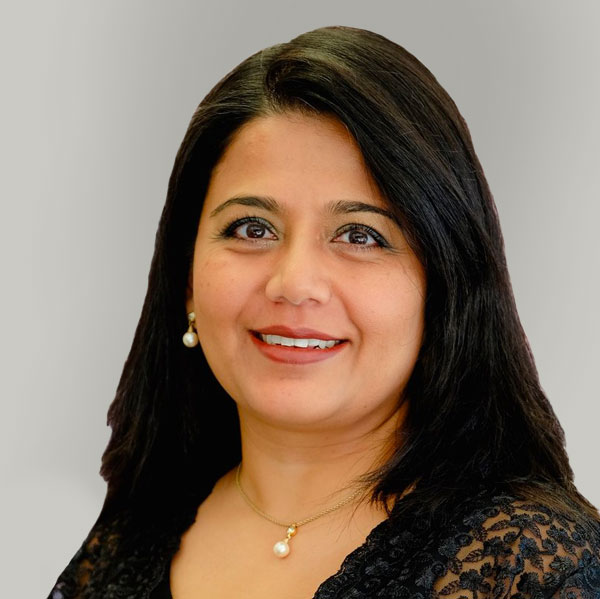
This week, Jack Sharry talks with Sneha Shah, Executive Vice President and Head of New Business Ventures at SEI. Sneha brings more than 25 years of global leadership experience across data, technology, and human-centered innovation.
Jack and Sneha explore how innovation actually takes root inside large financial services organizations. Sneha shares how SEI is incubating new ideas, empowering employees, and turning emerging technologies like AI and tokenization into real-world impact. The conversation spans mindset shifts, the role of community, generational and gender-based wealth transfer, and why partnerships—not ownership—will determine who wins in the next era of wealth management.
What Sneha has to say
“The largest obstacle to the emerging technologies is not the technology itself—it’s often the mindset that will allow that technology to take root.”
Read the full transcript
Jack Sharry: Hello everyone and welcome. Thank you for joining us for this week’s edition of WealthTech on Deck. I’m very excited to share this podcast with you. Our guest today is Sneha Shah. Sneha has that rare combination of vision, incisiveness, accomplishment, and warmth. She has more than 25 years of experience in business leadership, strategy, and execution globally. Her focus today is on creating and scaling new businesses at the intersection of data, innovation, artificial intelligence, and technology. I’ve come to know Sneha as the Executive Vice President at SEI and head of New Business Ventures. Sneha is responsible for new business and platform identification and incubation. She works on engaging clients, accelerators, and the entrepreneurial community to invest and accelerate new ideas and solutions with a focus on cultivating innovation that drives top-line growth. And no surprise as you will soon hear, Sneha is a delightfully positive person as well. Sneha, welcome to WealthTech on Deck. I’m so glad you’re here.
Sneha Shah: Thank you so much, Jack, and really appreciate all the positive commentary. I feel like I need to like sort of maybe say that I’m not maybe all of those things, but really, really happy to hear that.
Jack Sharry: I am allowed to have my opinions of you and I hold fast to those. So I’ve had the pleasure of spending a little time with Sneha over the time that I’ve been at SEI for the past year or so and everything I said is true. So Sneha let’s start with you sharing with our audience at a high level, your career history leading up to what you’re doing now. You have a rich and broad background. My observation is you have a clear sense of what’s next, especially around what I call the confluence of digital and human advice. So please fill us in.
Sneha Shah: Sure. I’ve had a long career in data technology and human impact. It started, I grew up in Kenya, lived in South Africa, lived in the UK, lived in the US. And so just being able to see things like basic human problems that happen in emerging markets with the wealth of data and technology solutions that were emerging in the West and then being able to connect the dots and say, well, actually, if you apply blockchain to land rights in Nigeria, how could you transform the mortgage market and financial services? Or if you apply AI to financial advice when there’s a generational wealth transfer happening, how can that transform the human experience of understanding wealth and wealth outcomes. And so I’ve always been very curious about that combination. I spent time in various companies. I got a lot of experience with Thomson Reuters in data and technology at the London Stock Exchange around scaling solutions around data and impact and have been at SEI for about two and a half years now doing the sort of same work, but now with wealth and asset management.
Jack Sharry: That’s great, I love that. So let’s talk about what you’re doing at SEI, share what you do, who you do it for, and how things are going.
Sneha Shah: Sure. So I lead a unit called SEI Next. And so SEI Next is a combination of an incubation unit where we take new ideas and bring them to life, a venture unit where we actually invest in startups and ecosystems that we believe are the future of the industry, and a partnerships unit where we actually work with others in the industry that are going in the same direction. And the reason that’s really important for us is as we look at the next horizon, so my role is really to look ahead one and a half, two years, and think about what’s going to happen in the industry and bring that back and make it relevant to SEI, my team’s job is to create signal out of the noise that’s out there. And so the best way we can possibly do that is by working with the communities that both internally and externally are most grounded in where the world is going. And so internally, it’s really about leveraging our 5,000 employee base. We have an internal innovation ecosystem called SEIsmic, where any employee can join and be part of the change and give us feedback about the things we’re building and be part of actually building them. We have an external community called the SEI Next Council where we take our most innovative clients and learn from them and learn together with them. And then we have the startup and VC ecosystem that we work with that’s really grounded in kind of where they see the next future of the industry. And so together, what we do is take all these communities and then we use the capabilities of incubation, venture, and partnership to start making sense of that. And I would say like we really are focused on emerging technologies that are going to be transformative to the industry, the two biggest ones that everyone’s talking about now, we’re not the only ones thinking about this, our AI and tokenization. And so that’s kind of where we focus. And then we think about where that applies and how we actually bring it to life within the company.
Jack Sharry: So talk about that. I’m familiar with the incubation aspect and the way you reach out to the various clients and community and just contributors to the thinking around all this. I’ve been quite impressed observing that. And talk a little bit more about how that then plays out in reality, specifically AI. I mean, you can’t go anywhere without that being the topic of conversation and then tokenization that’s fast emerging as critical. So how does that play out? How do you take that conversation or that exploration, that discovery process, and how do you bring it to life? Where do you go with that?
Sneha Shah: Yeah, I think often the largest obstacle to these emerging technologies is not the technology itself. It’s often the mindset that will allow that technology to take root. And it’s very true around AI because AI is probably one of the greatest transformative technologies that we’ve had since the internet. Some people will say since electricity. And so if you think back to when we went from steam to electric power, the people that succeeded were not the organizations that have the best talent, the best resources, the most money. It was really the organizations that could reimagine what a building would look like without the steam piping and could see that they could put power under the floors and they could raise the ceilings and they could have light in and they could do mass production. And I think it’s true that the same thing applies for AI. And so when we take that and say, okay, so what does it mean to an incubation process? The first thing you need to do is reshape the mindset of people who might have those ideas to say it is possible for you to raise an idea within SEI and it will be heard and will be funded. And so we started a competition called Best Idea Wins where we said any employee can come up with any idea, not just an AI idea, just any idea and it’ll be voted on by their peers and then the best ones will get taken through an incubation process. Just to allow people to shift the mindset to say, I don’t have to work in a certain area in order for me to contribute towards the ideas in the company. And so we had 215 ideas, not all of them were AI related. Some of them were things like, you know, can we get better food in the cafeteria? It was a bunch of different ideas, but we did get an amazing amount of ideas that were business related and technology related. And then we put them through a 90 day process where we gave people feedback so they could think about how do they actually build out their idea using a lean business canvas. And so we now have created from a group of employees, potential entrepreneurs. And so then what we do is we take the best ideas that come out of the 90 day process and we then start applying them into where in the business could they work, how could we actually build them out. And so that’s really what we do is we create that bridge from zero to one for employees. It’s often the hardest thing. The hardest thing is not taking something from one to 10, it’s getting it from zero to one because it feels quite hard to push up against the inertia. So we help the incubation process. And then naturally, if it has legs, it grows because then more and more people jump onto the idea.
Jack Sharry: So I’ve watched this in action and clearly there’s engagement. How’s it going? Is it turning into something? Because you also have a very, SEI at large, has a very rigorous process about how it allocates capital. You’ve probably heard a little bit about that in terms of where they put their money where their mouth is. So talk about not only the process, but then talk about how it’s going. Have ideas been fomented, created? Talk about that if you would.
Sneha Shah: Absolutely. So one idea was about how do we get all of our employees exposed to AI? Because I think that one of the feeling that some of our employees have had is that unless we give everyone access, it’s going to be very hard to bring the company along. And that’s turned into us rolling out Microsoft Copilot, that actually came through the capital allocation process. We got the funding for it and we’ve now got all 5000 employees live on Microsoft Copilot and we’re seeing over 70% usage on a weekly basis. And really, really active use cases throughout the company. In fact, we’ve had some innovation pitches within some of our divisions that have actually used Copilot as the basis for the innovation pitch. So you see this natural sort of evolution of something that started as an employee idea of what if we could take AI and make it accessible to everybody into now we’ve now actively got usage across the company of AI. And that’s just a small example that came from an employee. The other one, I think, that’s really interesting is another service that has come out is something that we do naturally for clients for free today and one of our employees came and said could you actually charge for the service and could it be something that scales across our client base and we incubated that, it went through capital allocation, we’re now piloting it as a professional service. If that pilot is successful, that will then become a scalable service that we offer. And so that’s another example of something. And so a lot of these, we’ve now had many examples of things that started from within the company, have had that pilot approach applied to them, and now have gone to that next level. I’m hoping by the time we speak next time that there will be some that have actually scaled in market and are already having impact.
Jack Sharry: And what’s the reception? What are you hearing from employees? It sounds like my observation is people are quite engaged. What’s the feedback?
Sneha Shah: It’s really interesting with innovation. There’s a lot of mixed feedback. So there’s general excitement about the ability to innovate. We do an annual innovation survey and there’s a 10 point uplift in the score from last year to this year in is SEI seen as an innovative place to work? And so we are seeing that that general excitement about innovation is coming and we are a more innovative place to work is there. The frustration with some people is, what does this mean for my job? Can I move fast enough? Can I learn fast enough? How does my idea, if it gets taken out to production, how do I benefit from that personally? And so we’re working through those things. Those are natural questions and we’re working through those, but it’s really good to see the engagement. The early signs are people are excited about it and they want to learn more and they’re leaning in, which is very good.
Jack Sharry: So you and I talked a little bit about this before we went on the air here, but one of the challenges communicating about all this, talk a little bit about that, because I think that’s fundamental in all aspects of business, whether it’s within or out to the marketplace. Talk about the challenges around communication, particularly around innovation.
Sneha Shah: I think one of things about innovation is people who… either they are really pro innovation, right? When they’re like actively going out every day, trying to challenge their own way of thinking and challenge the workplace, or they’re potentially very comfortable in the things that they do and they see innovation as a threat. And so depending on where you are on that spectrum, the communication needs to be different. And I think in a lot of organizations, we have a one size fits all communication strategy, which doesn’t work when it comes to innovation, because you really have to meet people where they are. And so what we really try hard to do is through something like a SEIsmic, which is an employee innovation community, we actually have different events that meet people where they are. And so there are some events that are design thinking, and here’s how you can learn design thinking. And there are some events that are, let’s bring in an outside speaker. And there are some events which are, let’s talk about the problems and the failures. And so depending on where people are on the level of skepticism or excitement, we meet them where they are. And I think that’s really important because innovation cannot be impactful unless you actually bring people along. And I see that with AI, I see it with tokenization. It’s really not something that you can just impose on people and say, now you will, right? Because the usage of it, the adoption of it, the scaling of it really depends on the human being feeling like it’s something that’s gonna help transform that job.
Jack Sharry: Yeah, it’s… I hadn’t really thought about it in the way you’re describing it. But basically you’re looking for the new and different and especially with a lot of what’s been written talked about around AI. It’s like, I’m gonna lose my job. It kind of goes to that. And so people feel threatened. So on the one hand, who isn’t for innovation if it’s good for everybody? But it’s not so good if it’s not good for me, and I’m out of a job. So this communication thing sounds to me and just my observation is quite important.
Sneha Shah: Very important. And I also think shifting that mindset to, I mean, you know, when photography first came out, people who painted thought that that was going to be the end of painting, right? And it didn’t end painting, it just created a new form of expression and art. And so I think we think that human experience is limited or bound by certain frameworks. But if you think about any major innovation that we’ve ever had, whether it’s the car, GPS, the internet, it hasn’t limited human expansion. It’s actually allowed it to like really thrive in new ways that we didn’t imagine. And so I always think that the failure of our ability to take advantage of technology is not going to be technology, it’s going to be our lack of imagination. And so the more that you can excite people’s imagination and get them to engage, the further you can really take these technologies. And that’s what really excites me.
Jack Sharry: I completely agree with what you’re saying. I would imagine too, it’s a lot around what I… good fashioned success stories, as I call them from my sales experience. That if you share successes where someone came up with an idea or someone came up with a way of operating that’s better, faster, cheaper, whatever it might be, others follow. At first they’re a little skeptical, they’re not so sure. And I think it’s really important to sort of see, oh, they’re thriving. They’re actually doing better. I think that’s the way of world, right?
Sneha Shah: I think so. And I think there’s something else about it. Not only does it have to be a success story, but it has to be a success story grounded in something that was a real problem for someone. Because if you get somebody their pizza five minutes faster, it’s kind of a nice to have, right? It’s not an essential thing. If you are able to solve a real problem where people feel like I don’t have enough client facing time, and then suddenly now you can use AI to do your meeting transcription and you can really focus in on the conversation with the client and you can have a better, a more meaningful conversation with that client, it enhances the human experience. And now you’ve got a problem that’s been solved and a real use case that you can use that other people will then believe in.
Jack Sharry: You’re working on lots of interesting opportunities. I know lots more is going on than you’ve shared here just due to time. So all oriented toward the future, what does your glass ball tell you about what things may look like for financial services industry over the next three to five years?
Sneha Shah: So I don’t have a glass ball and so I wish I could tell you exactly what’s gonna happen. But I think one of the things I’ve learned to do is sort of just be curious about what might be and to look at the dots that I see happening in the world, the big trends, and figure out how I could maybe connect the dots in a different way. And I’m often wrong, but then I adapt and I learn how to connect dots in a different way. And then, you know, sometimes I’m right. And so the dots that I’m seeing today are some really interesting dots. I think one is around this idea of the great wealth transfer that everyone’s talking about. And so this next gen transfer of wealth is not just a transfer to the actual next generation. It’s first a transfer of wealth to women. So 70% of the wealth in the US and the UK in the next eight years is going to go into the hands of women as the baby boomers pass on their wealth. And as we know that women have a different way of thinking about wealth generally than men do. And so when you think about goal-based investing, men will often say, I want to think about my goals and then my family goals and then my community impact goals. And women will often start with here’s my family goals, here’s the community impact goals, and here’s my goals at the end. And just if you think about what that’s going to transform in the way that advice and wealth work, it’s going to have to be a pretty significant transformation in the training and the tools that advisors use. So that’s one dot. The other dot I see is really this idea of more people having access. And so if you think about young people and now with digital technology, that more people have access to information about wealth. So TikTok, people can argue about, is it the best way to actually communicate or train people on wealth outcomes? But it’s actually how young people are getting their information today. And so they have more access to information about how to build businesses, create wealth over time. But they’re also looking for community. And so I think that’s something that people miss when they think about the digital experience is actually, especially post COVID, young people are really looking for ways to engage in community, whether it’s Discord and online communities like that, or whether it’s actually in person, you’re seeing a big rise in in person communities within universities within post university work for young people. And that’s because they’re really craving that, how can we learn together? We also know, by the way, that women like to learn and grow in community. And so community is a really big dot that I think people are somehow missing as they think about technology. The other piece is that technology is just getting faster and cheaper so you can get caught up in, oh my gosh the pace of change seems crazy. Or you can go, well actually what it took to build an LLM a couple of years ago is not what it’s going to take to build now. There’s now a question of do we need all the AI data centers that we’re building, right? Or actually, is it going to be even faster and cheaper? And we know that the trend is going to be that some of this stuff is going to come to us. So that’s another dot that I connect. And so if I think about what do some of these dots look like, there are many other dots, but I’ll just take these. Some of these dots for me look like the winners in financial services and wealth and asset managers are going to be the ones that really think through how do I reimagine the advice that I’m giving to be more holistic and integrated about whole life? Because now you’re looking at cross-generational advice and you’re really trying to engage both young people and the women that are going to inherit the wealth. How do I create community solutions so that, not just am I an advisor for young people, but maybe I’m a curator of a community of young people and connecting them to each other so that they can learn from each other as they grow and as they grow their wealth? And how am I using digital to improve access to wealth to people who are traditionally underserved. And so we talk a lot about the mass affluent and how they are not served well with the same solutions that they probably need around tax, around advice, around all of these other pieces that they need to get on the ladder and stay on the ladder. Well now through technology you could probably give more people those personalized solutions without the level of cost. And so I think the winners in the next several years are going to be the people who lean into those big trends and start to provide solutions that tie together this idea of community, of access, of digital, of generational transfer, of gender-based wealth. Those people are going to be really successful.
Jack Sharry: Love it. So we’ve covered a lot of ground. You’ve got a lot of plates spinning. Anything we haven’t covered you want to make sure our audience would benefit from hearing?
Sneha Shah: I think just this idea that this isn’t something that organizations are going to be able to do alone. The pace of change is really rapid and one of the biggest things I see that is problematic in the industry is organizations, if they look at tokenization or AI, they tend to want to build and to own everything. And the pace of change is too fast for that. And I think a lot of organizations will waste a lot of money trying to build everything themselves when it is shifting. And so I would say, really look to partner. There’s a very good African proverb that I like that says, if you want to go fast, go alone, and if you want to go far, go together. And I see it with client feedback as well, that they’re worried that they’re not going to be able to go fast. And so they’re trying to react to things. And I think actually being intentional about where you want to partner and what you want to own is going to be much more successful. So for example, with SEI, one of the things we think about is we want to own the data. I think data is going to be one of the modes that we think about in the future. We want to own the communities and the client relationships because we believe that that creates modes. We don’t want to own every general purpose tool, right? We want to partner with the people who are really good at building intuitive tools that our clients will benefit from. And we want to partner with people who are thinking the way that we’re thinking and trying to serve the same communities as us. And so, figuring out who you can go with and where to actually spend your own resources will be really important as we think about how to navigate the pace of change.
Jack Sharry: You know, Sneha, I had a pretty high expectation, but somehow or another you far exceeded it. Thank you. I love this. Great information, great insights, great conversation. So as we look to wrap up, what are a few key takeaways you’d like to leave with our audience?
Sneha Shah: I’d say, thank you, I’ve really enjoyed this conversation too. I would say just three things maybe. I think curiosity, stay curious, try and find ways to test your own brain about thinking about the things that might be unthinkable because the more you can engage your imagination, the more you’ll be able to do. I think the second thing is be intentional. I think some of these new technologies can be weapons or they can be really useful. And the difference is gonna be in the intention that we put behind them. It’s like getting yourself behind the wheel of a very fast car. If you don’t really think about how you’re driving it, you’ll wrap yourself around a tree. And so I think just being intentional about the use of technology is going to be important and being grounded in values. And then the third thing is partnership, is just really think about how to go together with others. So those would be my three.
Jack Sharry: Wow. Love it. So thanks for this conversation. Again, wonderful. Really have enjoyed every bit of it. As we do at this point in our podcast, as we look to wind down, we have one last question. What do you do outside of work that you are excited or passionate about that people might find interesting or surprising?
Sneha Shah: So I did this work on Ikigai, which is the Japanese philosophy that if you find the intersection of what you love, what you’re good at, what the world needs, and what you can get paid for, that you will find like real purpose and happiness in my life. And one of the things I’ve realized with myself is that’s not one thing, it’s a cluster of things and so it’s a portfolio. And so my portfolio outside of work is really clustered around this idea of entrepreneurship and education. And so I do a lot of work with entrepreneurs in Africa and emerging markets, and then also with building and strengthening education systems around the world. Because I do believe that the pace of change that we’ve got in the world right now doesn’t allow us to be traditional in our thinking about education, that we have to educate people, especially in emerging markets around entrepreneurship, because there’s not gonna be enough jobs for all the young people coming out of those markets. And so teaching young people in emerging markets entrepreneurship is a passion of mine. I spend a lot of time with African Leadership Academy, with a group called the Harambeans, and with an organization called Education Development Center, all nonprofits that are doing amazing things around innovating around these ideas and a lot of the ideas that start in places like Kenya or Nigeria are actually globally scalable and I think a lot about that reverse innovation coming out of emerging markets that can really change the world and so that that’s what I keep myself busy with outside of work.
Jack Sharry: Gotcha. That’s wonderful. I love it. So thanks, Sneha, this has really been a really wonderful conversation. It’s been a real pleasure to speak with you. So I really enjoyed it. Thank you. For our audience, thanks again for tuning in to our podcast. If you’ve enjoyed the podcast, please rate, review, subscribe, and share what we’re doing here at WealthTech on Deck. We’re available wherever you get your podcasts. You should also check us out at our dedicated website, wealthtechondeck.com. All our episodes are there along with blogs and curated content from many folks around the industry. Again, Sneha, thanks so much. This has been a real pleasure.
Sneha Shah: Thank you so much, Jack.