
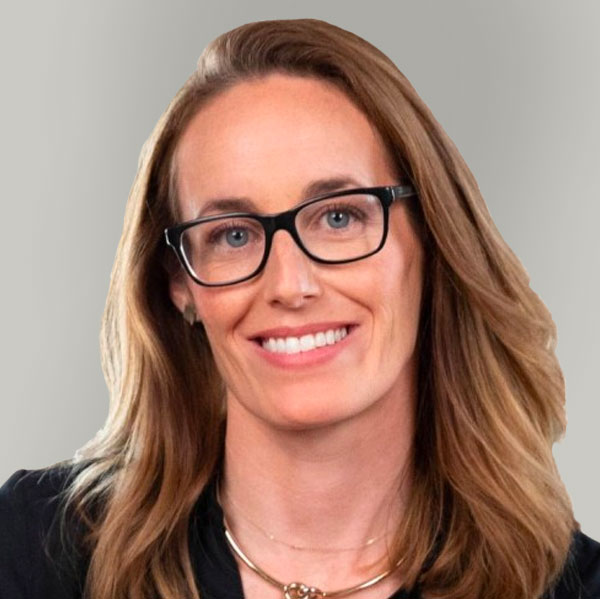
From Wealth Manager to Wealth Advocate with Shauna Mace
This week, Jack Sharry talks with Shauna Mace, Managing Director and Head of Practice Management at SEI, where she also leads the SEI Growth Lab. Shauna began her career helping run a small RIA outside Philadelphia, later founded her own consulting practice, and now works with hundreds of advisory firms each year on growth, scale, client experience, talent, and leadership.
Jack and Shauna explore the “fifth act” of advice, a framework for where the industry is headed and how the advisor’s role evolves within it. Shauna argues that with investment products, planning tools, and information now accessible to nearly everyone, firms can no longer differentiate by adding services. Value shifts to outcomes: behavior change, progress toward life goals, and a client experience that is consistent, personalized, and scalable. They discuss why organic growth remains a struggle, what the fastest-growing firms get right, from specialization and digital presence to building a culture where growth doesn’t rest on one person, and the three questions Shauna uses to shape a firm’s growth strategy. She also shares how she thinks about AI as an accelerator for whatever a firm is already trying to do.
What Shauna has to say
“Delivering value is going to really be about outcomes. It’s going to be about providing context, connecting dots. It’s not just outputs. People can get outputs.”
Read the full transcript
Jack Sharry: Hello, everyone, and welcome to this week’s edition of WealthTech on Deck. Regular listeners know that I’m fascinated by where our industry is headed. Not just the next technology or investment innovation, but the broader revolution in financial advice. How advisors create value, how firms scale, and how they continue to deepen relationships in an increasingly digital world are all things I find endlessly fascinating. One of the most thoughtful perspectives I’ve come across recently is the idea of what some are calling the fifth act of financial advice. The concept suggests that our industry is moving into a new era, one in which advice becomes more integrated, personalized, proactive, and increasingly enabled by technology and AI. My guest today spends her time at the center of those conversations. Shauna Mace leads practice management at SEI and the SEI Growth Lab, where she works with advisory firms across the country on growth, scale, client experience, talent development, leadership, and business transformation. She has also been a leading voice on the practical application of AI in advisory firms and what it takes to create sustainable growth in a changing marketplace. Today, we’re going to explore where advice is headed, what firms are doing right now to grow and scale successfully, and how advisors can leverage technology without losing the human connection that makes this profession so valuable. Shauna, welcome to WealthTech on Deck. It’s great to have you here.
Shauna Mace: Thank you, Jack. I appreciate being here.
Jack Sharry: Shauna, you’ve spent much of your career helping advisory firms become better businesses. Tell us about your journey, how you found your way into practice management, and what you’ve learned from working with hundreds, and I mean hundreds, of advisory firms. Fill us in.
Shauna Mace: I got really lucky coming out of school. My first job was at an RIA firm outside Philadelphia. At the time, the firm had maybe six people and $250 million in assets under management. They did an incredible job for their clients. I didn’t expect to be in the industry, but I had this great opportunity at a small organization with two wonderful founders. I learned a ton. I was hired as a marketing coordinator, which was more aligned with my academic background, but I fell in love with the business and with helping to run it. I was there for eight years and, pretty quickly, ended up running the day-to-day operations of the business, which I found fascinating. It was a great place to start. I had several different stops along the way that contributed to the realization that I really love helping individuals and organizations grow. When I say “grow,” that means different things to different people. It depends on where you are in your journey. I worked at a very fast-growing alternative investment manager, which was a completely different type of growth. I then started my own consulting practice, focused primarily on helping advisors grow. That involved very different growth goals. I’ve also worked at a publicly traded company. I love learning, helping people, and helping people reach their potential, whatever that means to them. I think that’s just how I’m wired. That early role at the RIA firm really informed how I think about practice management. We try to make it practical, actionable, and realistic, understanding that advisors and their teams wear a million hats on any given day. How do we help them make key decisions and take actions that move them forward on their growth journeys?
Jack Sharry: As I hear you talk through your background, and knowing that you’re an awfully busy person with everything you have on your plate, it might be useful to talk about the dynamic of the work. How do people find you? How many people are you dealing with? Give us a sense of scale, because I know it’s pretty significant in terms of the number of advisors you work with and the sales and relationship management teams at SEI. Talk about how that dynamic works and your role in it.
Shauna Mace: That’s a great question, and it’s actually what led me to SEI. When I had my own consulting practice, I was a solopreneur. I quickly encountered the challenge of scale, which I think any service provider, and really all of us at this point, is dealing with. How do we do more with less? How do we create capacity, efficiency, and consistency? That became an important part of how I thought about evolving the great practice management work SEI was already doing. There are many ways people can find us. Those who don’t work with SEI can access our resources through the SEI Growth Lab, which is available on seic.com. You can Google “SEI Growth Lab,” and it will be the first result. It’s a collection of actionable practice management toolkits that anyone can access. It also serves as the infrastructure we use when doing consulting work. There are three people on my team. We each specialize in certain areas, but we also have the ability to work broadly. For SEI clients, we engage in consulting work using a systematized approach and leveraging the resources we’ve built through the Growth Lab and beyond. We’re on track to complete more than 250 consulting engagements this year. We think carefully about how to deliver value and meet people where they are, whether they’re doing the work themselves or doing it with us. We also lean heavily on communities. Several years ago, we built communities into an online forum so that people could receive advice not only from us, but also from their peers. We think that’s an important resource. More than 1,000 SEI clients are members of our five communities. They can ask questions and receive advice from peers who have gone through similar experiences, whether that involves changing a CRM, investing in a marketing partner, or refining how they approach events. We try to leverage the collective intellectual capital that exists on our team, within SEI, across our industry, among our partners, and throughout our communities.
Jack Sharry: That was great. Thank you. I appreciate that because some of it I didn’t know, so thank you for sharing it more broadly. Recently, you’ve been exploring the concept of the fifth act of advice. For listeners who may not be familiar with the idea, what does it mean? Is it being driven by client expectations, technology, demographics, or all of the above? Fill us in.
Shauna Mace: The fifth act is a concept we created to articulate where we think the advice industry is going, what comes next, and, probably more importantly, the role the advisor will play in delivering value in the future. When we look back, there have been several evolutions in the advice industry. Today, when we think about a typical advisor, we think of a wealth manager providing investment management and financial planning while meeting high expectations and delivering many services. We don’t think that will necessarily change, but we do think the next evolution is being driven by several forces. You mentioned many of them: enterprise-firm dominance, changing consumer behaviors and trends, AI, technology, and the democratization of access to investment management tools, products, and planning resources. All these factors are contributing to an acceleration. We believe the wealth manager will need to evolve. Delivering value will increasingly be about outcomes, providing context, and connecting the dots. People can get outputs. The question is how we help coach them and change behaviors. How do advisors create an experience that conveys not only, “I trust you,” but also, “I believe you care about me”? How do they engage clients differently? We’ve been thinking about this as a transition from wealth manager to either wealth advocate or wealth coach. I’d be curious to hear your input on the name. The idea is that this person co-creates outcomes with the client through a hybrid human-and-technology engagement. They meet people where they are, personalize the experience, and create outcomes that matter through meaningful connections. As we look to the future, human connection and community will become increasingly valuable. There’s a whole lot of noise out there right now.
Jack Sharry: Yes, there certainly is. I’m fascinated by what you’re saying. I’ve seen this coming for a while, and it’s consistent with what I see happening across the industry. You have a wealth of information and capabilities to support the advisor in becoming that advocate, the person who works with the family. That’s what I look for in an advisor: someone who is on my side and can help me think through everything that’s going on. I have my own thoughts, but I’d love to hear yours. Why is this shift happening now? What forces are driving the change? It’s been coming, but it’s definitely happening. Fill us in.
Shauna Mace: There are several forces. One important factor is the increase in investor expectations over the years. A lot of that has to do with access. Almost anyone can now access different investment products and vehicles, technology, planning tools, insights, and education. At a certain point, firms can’t simply keep delivering more services. Most firms already deliver an incredible number of services. They’re providing investment management, basic financial planning, retirement planning, and advanced planning. So, what comes next? That’s what got me thinking about this. These changes are being driven largely by enterprise-firm dominance. When we look at the wallet share of the largest RIA and independent broker-dealer firms, it’s pretty remarkable. In the RIA channel, firms managing $5 billion or more manage more than 90% of the assets. It’s a similar story in the broker-dealer channel, where the 10 largest firms by assets manage more than 90% of channel assets. How do firms keep up? It can’t simply be about offering more services. It has to be about the experience, the benefits, and the way you make people feel. Many advisors may think, “I already do that,” and some do an incredible job. But how do you package and deliver that experience in a way that clients perceive as valuable? How do you provide evidence? How do you do it systematically and in a way that is scalable? It can’t depend entirely on one advisor who has been doing this for years and happens to be a great coach. How do you continue delivering that experience over time? We’re encouraging firms to think about developing skills and operations and leaning on partnerships to expand their capabilities and increase their time and capacity. That will better position them to make the pivot and decouple their value from the idea of simply picking the right investments. Investment selection is valuable, but almost anyone can access that now. So what is truly valuable? We’re challenging how the industry thinks about advisor value and the value of advice, with a greater focus on human coaching. The metrics we encourage firms to track and communicate to clients and prospects go beyond investments and services. They include behavioral change. Are clients making better financial decisions? What are the outcomes, and how can you quantify them? Are clients progressing toward their life goals, not just their portfolio goals? How do you provide evidence of that through measures such as retirement readiness or goal-funding progress? Finally, there’s the experience itself. Everyone says they provide a great experience, but not everyone can be providing a great experience. Do clients feel understood and cared for? What is their sentiment? Are they engaged? We see that engagement drives referrals and satisfaction. Is the experience consistent, personalized, and scalable, or does it depend entirely on one individual? Those are the issues we’re focused on.
Jack Sharry: This is fascinating. I love it. The future is important in terms of where we’re all headed, but most firms still have to run a business today. That brings us back to a topic that never seems to go away: organic growth. You spend a good deal of your time helping firms grow. When we talk about organic growth, we’re basically talking about net new assets, whether that’s money from existing clients or from people firms haven’t met yet. I know you lead the SEI Growth Lab. Let’s start with a little more about the Growth Lab, the role it plays, whom it serves, and how it is applied in business today. Fill us in.
Shauna Mace: Organic growth is definitely a struggle, and that has been the case for several years. The average growth rate for independent advisors is just over 3%, which doesn’t even keep up with annual distributions. There’s definitely work to be done. The Growth Lab is a collection of actionable practice management toolkits. Some are focused on growth, including business planning, generating more referrals, generating leads through marketing, creating a niche, and articulating your value. We have several toolkits that address what I would consider the foundational elements of growth. If growth is your focus and you haven’t completed that foundational work, these are the things you need to do to set yourself up for success. We also have several toolkits focused on scale. Growth and scale are closely related. We define scale as creating capacity, efficiency, and consistency. To continue growing, a firm needs to be able to scale. Early in an advisory business, there may be a period when the priority is entirely growth. You simply need to grow. Then you reach capacity and have to determine how to scale and grow at the same time. That makes the business more complex. Each Growth Lab toolkit has at least three tools designed to help you do three things. First, understand where you are. If the topic is referrals, what are you doing well, and what might you need to improve? Second, develop a plan. We’re big believers in having a game plan and a process for generating introductions and converting those introductions into clients. Third, activate the plan. That’s usually where the ball gets dropped. You create the plan, but you can’t put it away in a file and never look at it again. How do you activate it in your day-to-day work so that you take the actions necessary to evolve? The Growth Lab is available to anyone. You can Google “SEI Growth Lab” or search for it on the SEI website. Anyone can access the resources, and they’re foundational to how we think about growth.
Jack Sharry: When you look at the industry today, what are the fastest-growing firms doing differently? You mentioned several things a moment ago, but perhaps you can give us a case study. You don’t need to name the firm, but what are smart firms doing? How do they embrace organic growth not simply as a notion, but as a practice?
Shauna Mace: The first step is getting the foundational elements in place. That begins with defining an ideal client. If you’re investing in marketing, you need a target audience. It might be a subset of your broader ideal-client profile, but you need to be clear. The more specific you are about whom you want to grow with, the more you can amplify your ability to reach them and be relevant to them. You can build everything around that persona or target audience. The best firms have a specialization, niche, or ideal client, whatever you want to call it. They’re very good at speaking to that client in the client’s language. It’s all about the client, not the firm. They understand the client’s needs, focus on those needs, and provide value around them. In some cases, they begin building trust before they even meet the person. Once that person becomes a client, they continue adding value throughout the relationship. Specialization is huge. Growing firms also do a good job with their digital presence. They show up consistently and in an others-focused way. They’re clear about whom they serve, how they can help, and what the engagement looks like. They demystify the experience. What does working with us look like? Who are we? They communicate this consistently everywhere they appear online because that’s where people go today, whether they were referred or are searching for answers. That foundational work is extremely important. The other side is capacity. I repeatedly see firms grow strong businesses and then reach capacity, which makes further growth difficult. Some firms pivot well when they hit that capacity wall, but most struggle. Successfully navigating it requires leaning into talent and creating a culture of growth. It means ensuring that the firm’s growth doesn’t depend entirely on one individual and investing in the right partners. The firm doesn’t have to do everything itself. It might need a marketing partner or the right new hires, based on what the business needs today and in the future. For a specific example, we’ve worked with a firm that is growing very quickly within its ideal-client audience, which is primarily business owners. One of the best things the owner did was let go of control. He recognized that he couldn’t be the single person upon whom the firm depended for growth. He created a culture that promoted and supported next-generation talent. He put those individuals in positions where they could build deep client relationships and take on responsibility, while encouraging them in ways that made sense for them. He helped them succeed as advisors and business owners. By getting out of the way, he created a wonderful culture. They operate as a team and grow together. Clients trust the entire team, so relationships don’t depend on one person. The firm provides exceptional advice, focuses on its target audience, and has a strong digital presence. It’s doing the fundamental things well. It’s not always about doing more. Sometimes it’s about doing the basics correctly, getting out of the way, and ensuring that the burden of growth doesn’t sit on one person’s shoulders. That can accelerate long-term growth and the ability to scale.
Jack Sharry: It’s fascinating. I love this. You’re doing exceptional work. As you know, I’ve been talking to many firms, particularly RIA firms, about what they’re doing to drive organic growth. It sounds like what’s required is a repeatable growth process, almost a discipline. I’m hearing words such as leadership, culture, and getting out of the way. The other side of that is intentionality and making things happen. Perhaps you can sum it up because we still need to ask the age-old question at this stage of our lives: What about AI? I want to get to that in a moment, and our time is growing short. How do firms make what you’re describing happen? It seems to be a firm-level effort. It’s no longer just an individual undertaking. It’s about the team and the firm.
Shauna Mace: Absolutely. I love getting practical, so I’ll be very practical when it comes to organic growth. When we’re consulting, there are three things we listen for or try to uncover to help firms develop a strategy. It’s all about intentionality. What are your specific goals? What is your approach? What is your plan, and how are you executing it? Having a process is incredibly important. If you’re going to invest in marketing, you need a marketing plan. You also need a business plan. These things are basic, but they’re extremely important. We have resources in the Growth Lab for firms that need help. Three practical considerations matter when creating a marketing engine. There is no single right answer. I wish there were because it would make things much easier. First, what is your goal? What does success look like one year from now? Is it based on assets, the number of new clients, the number of right-fit new clients, or revenue? What are you actually trying to accomplish? Are you trying to grow by adding hundreds of clients, or are you trying to grow intentionally by adding 10 right-fit clients? Those goals will dictate different marketing approaches. Be clear about your goals and make sure they align with your larger objectives. Second, whom are you trying to target? Who is your target audience? Again, you need to be specific. “Retirees” is not specific enough. What type of retirees? Where are they? What are their interests and concerns? What are their demographics and psychographics? The more precisely you define whom you’re trying to engage, the better you can determine where to show up, what to talk about, what calls to action to offer, and what the client journey should look like. Which audience matters to you? Third, what are your strengths and opportunities? Lean into them. Firms often do things they don’t enjoy and aren’t good at, and I don’t understand why. We all have strengths and opportunities. A strength might be a specific expertise, being a great speaker, or already being active on social media. Those are the things you should lean into. You don’t need to do everything. You need to focus on one or two things. An opportunity might be a large client base or strong community connections, which could support a referral strategy. In that case, how do you refine the referral process? Another opportunity could be a client specialization. Perhaps you need to show up where cardiologists in a specific geography spend their time and help them understand the questions they should be asking. Those are the three things I listen for when helping firms build a strong strategy: the goal, the target audience, and the firm’s strengths and opportunities. Stay focused. Don’t try to do too many things. A one-page marketing plan can walk through the fundamental best practices. You need content. You need to use the right channels. You need calls to action. You need to be intentional about where you’re leading people, and you can’t ask for too much too soon. If you have no idea what I’m talking about, please hire an expert. There are many good ones. Some firms have in-house people who can do this, while others don’t. Some have team members who may not yet have experience but are interested. Lean into those people. We also work with experts who help advisors develop and execute their plans. Finally, involve your team. Make sure everyone understands why the firm is pursuing its strategy and how it will be executed. Growth is cultural. It’s a mindset, not one person’s responsibility. Celebrate wins and help people connect the dots between their roles and the firm’s growth goals. Everyone should understand what their role looks like and receive the encouragement and support needed to play it.
Jack Sharry: I love what you’re doing. It’s smart, practical, and right on target. I have to ask the AI question because no podcast is complete without it. Where does AI fit into all of this?
Shauna Mace: AI is another tool that can accelerate whatever you want to accelerate. If your priority is growth or scale, how can AI help? AI isn’t always the answer, but it is a way to enhance and accelerate our ideas, thoughts, actions, and work. You need to be specific and intentional about how you use AI. I’m happy to share the process we encourage people to use when thinking about it, which may be somewhat different from how many people approach it today. AI is an accelerator. It can create capacity. Think of it as a superpowered new employee.
Jack Sharry: I’m right there with you. I use it all the time. It helps me think better and do more, more quickly and effectively. I assume you agree. One last thing before we bid adieu for now. We’ll have to have you back because there’s so much more we haven’t discussed. We try to keep the show to about half an hour, and this conversation has been jam-packed with good ideas. I know there’s much more behind everything you’ve shared. Until we meet again on these airwaves, let me close with one of the questions we like to ask at the end of every podcast. What do you do when you’re not working on everything you’ve just shared so beautifully? We’d love to hear what our guests do outside work for fun, family, and relaxation. When you aren’t working and doing all these great things, what do you do to relax and have fun? Fill us in.
Shauna Mace: I have a second job as an Uber driver for my 11- and 14-year-old daughters, who are very active. I love it and have no complaints. There’s a lot of windshield time driving them to soccer games.
Jack Sharry: Which is good in and of itself.
Shauna Mace: I’m very busy with my kids. As a family, we love food. My husband is actually an advisor, so I live this work in all aspects of my life. We love eating good food. I’m based just outside Philadelphia, and over the recent holiday weekend, we went into the city and tried an unbelievable taqueria. If anyone is in Philadelphia, Burrito Feliz Taqueria is incredible. We went because my youngest daughter, who is 11, has really gotten into birria tacos, the tacos you dip into the consommé. They had incredible tacos of all types, including birria tacos. We love exploring, eating, and exploring through food.
Jack Sharry: I love it. Very good stuff. Shauna, this has been a great conversation. I’ve learned a ton. I know there’s much more to learn, and there’s also a lot of information on the website. I encourage our audience to check it out. Once again, so everyone knows where to go, what is the best place to find the practice management resources you’ve been discussing?
Shauna Mace: Go to SEI’s website, seic.com, and look for the Growth Lab. You can also Google “SEI Growth Lab” or search for it on the website. The SEI Growth Lab is the place to go.
Jack Sharry: Terrific. I appreciate your thoughtful perspective on where advice is headed, what it takes to build a firm capable of sustainable growth, and how leaders can use technology and AI to create better outcomes without losing sight of the human relationships at the heart of this profession. Thank you for joining us on WealthTech on Deck. To our audience, thank you for listening. If you enjoyed this episode, please rate, review, subscribe, and share. You can find us at wealthtechondeck.com. Shauna, this has been a lot of fun. I really enjoyed it, and I look forward to our next conversation. Thanks so much.
Shauna Mace: Thank you so much. This has been a blast.