How Technology and Operations Enable Total Wealth Advice with Alok Kapoor and John Hogarty
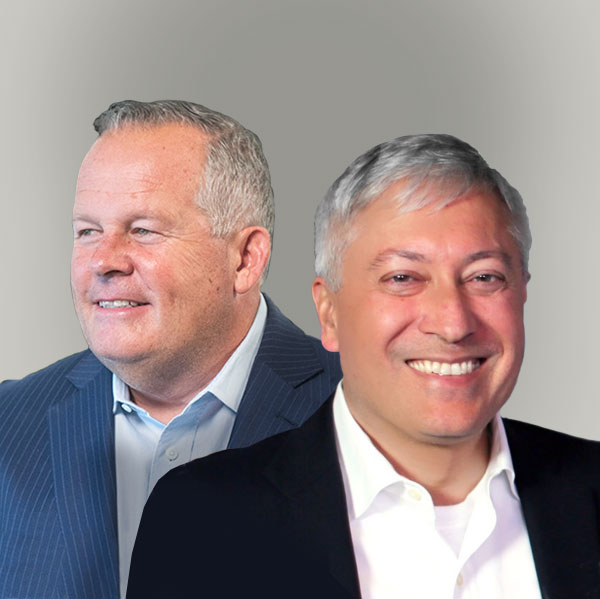
This week, Jack Sharry talks with Indivisible Partners’ Founder and Chief Technology Officer, Alok Kapoor, and Founder and Chief Operating Officer, John Hoharty. Alok oversees and guides the firm’s technology direction and brings leadership experience from Fidelity Investments and Merrill Lynch. John leads the company’s growth by optimizing operations and technology, with a track record of managing large-scale initiatives and building platforms at Merrill Lynch’s Global Wealth and Investment Management for Bank of America.
Alok and John discuss how technology and operations serve as competitive differentiators for wealth firms. They share how they built a fully integrated platform, powered by technology and human expertise, to align clients’, advisors’, and firms’ objectives. Alok and John also discuss what it means to deliver total wealth advice and how the future of wealth management will be shaped by those with the capabilities to serve clients best and build processes and efficiency into their businesses.
What Alok has to say
“Everyone is racing to build with AI. But speed only matters when you’re building on solid foundation. We’re focused on moving quickly while creating a foundation designed for what’s next.”
Read the full transcript
Jack Sharry: Hello everyone, and welcome to WealthTech on Deck, our weekly podcast all about how technology and human beings together are transforming financial advice. In each episode, we speak with leaders from wealth management, insurance, retirement, consulting, and fintech who share their insights on innovation and collaboration to help investors, advisors, and firms achieve better outcomes. Today’s conversation sits right at the center of that discussion. My guests today are Alok Kapoor and John Hogarty of Indivisible Partners. Indivisible Partners is an independent, privately held wealth advisory firm focused on helping advisors deliver high-touch, comprehensive advice through a client-first model, a rigorous planning process, and a collaborative, customizable technology platform built to improve quality decision-making. The firm has selected Advyzon as the foundational hub of its wealth platform, pairing advanced planning tools, open architecture, investment capabilities, and integrated workflows to support advisor productivity and growth. Alok Kapoor is a founder and chief technology officer at Indivisible Partners. He oversees the firm’s technology direction and brings leadership experience from Fidelity Investments and Merrill Lynch. John Hogarty is also a founder and chief operating officer at Indivisible Partners. John leads growth through operations and technology, with a long record of large-scale execution and platform building from his years leading operations at Bank of America Merrill Lynch’s Global Wealth and Investment Management business. Alok and John, welcome to WealthTech on Deck. Great to have you here.
John Hogarty: Thanks for having us, Jack. Appreciate it.
Alok Kapoor: Great to be here.
Jack Sharry: Let’s start with the why behind Indivisible Partners. I’ve been following you from the start. There are plenty of firms in this industry talking about independence, advisor support, and client-first advice, but you and your colleagues clearly believed there was room and need for a different model. What gap did you see in the marketplace, and what made you decide to build Indivisible?
John Hogarty: I’ll jump in. The gap we kept coming back to was the lack of alignment among client, advisor, and firm in terms of common stakeholder objectives. One of the things we, as founders of Indivisible, have consistently done is walk in the shoes of both the client and the advisor. Looking at the marketplace opportunity, we felt there was a gap in the capability to deliver against the total wealth portfolio. A lot of the industry is focused on the portfolio, but we need to move beyond that to more comprehensive advice and higher-quality advice. The challenges clients face are only getting more complicated when life meets money. When we talk about the multigenerational household, dealing with aging parents while raising children or supporting adult children, the decisions become more complicated. Money needs to do more jobs. We felt the best way to address that was to establish an RIA and help advisor teams build their businesses, while we shoulder the operational, execution, technology, compliance, marketing, and administrative work that we have built careers around. That allows advisors to continue focusing on delivering advice to clients.
Jack Sharry: Thanks, John. Alok, I’ll put a twist on the same question. What did you believe advisors were not getting from existing models? You’re a relatively recent entrant as a firm, although you have decades of experience as executives at places like Merrill Lynch and Fidelity. What caught your attention that made this the right time to do what you’re doing?
Alok Kapoor: Great question, Jack. Part of it is that the marketplace, especially in the fintech world, has evolved quite a bit over the years. What was once a competitive differentiator for large-scale warehouses has, in some ways, turned into the opposite because of the legacy footprint many of them are dealing with. So much time, investment, and resources are spent cleaning up challenges of the past, while we have the ability to come in with a clean sheet of paper. We can leverage best-of-breed capabilities, cloud, APIs, and modern data platforms to build a platform that won’t go obsolete. We can assemble best-in-class capabilities without having to own each of those pieces. That’s a big part of the why. Another component for us was the opportunity to work with a world-class team. John and I worked together many years ago. Our CEO, John Thiel, and a number of other industry veterans have a strong view of what good can and should look like. This is a chance to build it.
Jack Sharry: Of course, John Thiel was a member of the LifeYield board, where I hail from, and has been a longtime friend, mentor, and advisor to our business. You also have a number of former Merrill executives and other experienced leaders on your team. This is not just a couple of people with a bright idea. These are tried-and-true veterans, and I hope you’ll talk more about that. One of the things that makes this conversation especially interesting is the combination of perspectives the two of you bring. Alok, your background is deeply rooted in enterprise infrastructure, modernization, and technology transformation. John, yours is operating at scale, integrating teams and technologies, managing risk, and building advisor-client platforms. How do those two disciplines, technology and operations, come together in your minds as competitive differentiators for a modern wealth advisory firm?
John Hogarty: I’ll start. This goes back to the early 2000s, when Alok and I had the opportunity to work together for the first time and had to fix a billion-dollar technology problem at Merrill Lynch and develop a new wealth management technology platform. It always starts with walking in the shoes of advisors and clients. As consumers of wealth and financial services, it’s easy to put yourself in the shoes of the client and think about what expectations you would have if you were sitting across the table from an advisor, and what information and quality of advice you would expect to receive. We have always grounded ourselves in that. We have also thought about the business through three core pillars. First is human capital: the advisors themselves bring the subject matter expertise, judgment, and decision-making. Second is strong business process, which creates repeatability and efficiency that can scale across a full book of clients. That gives the advisor a set of standards and discipline around a total wealth approach. The third pillar is technology, which is the productivity tool and orchestration engine that creates efficiency across practices. I don’t view Alok simply as a technologist. I view him as a business executive first, with domain expertise in technology. That allows us to collaborate, think about problems, and solve them from all angles.
Jack Sharry: Alok, your thoughts?
Alok Kapoor: I would add that the integration of technology and operations is one of the things I have loved about working with John in the past and again in this venture. Not everyone really understands that integration, or they treat it as an afterthought. Most firms treat both technology and operations as back-office cost centers. They are measured on risk and budget. As John said, we think of them as the product. To the advisor and client, this stuff working is the product. It has to work. That ties back to what you mentioned earlier about the team. Having a team that understands these core convictions is a big part of why we are here.
Jack Sharry: My impression, having spent many years in this business, is that technology and operations historically were treated more as a nuisance or a problem. Now they are fundamental to being effective. The scale, the speed, and the ability for technology and operations to work together to create solutions have really evolved.
John Hogarty: I think that’s right, Jack. It’s about expectations. People expect a certain level of quality, performance, reliability, and uptime from technology. The same is true with operations. When you’re dealing with people’s wealth, you can’t make mistakes in the back office. It’s important that numbers tie out and match clients’ expectations. The soundness, safety, consistency, and quality of reporting, client interaction, money movement, and asset protection are all incredibly important.
Jack Sharry: Let’s talk more about what you’re building at Indivisible. For listeners who may be hearing about the firm for the first time, how do you describe what you’re building and who it’s for? You talk a lot about pulling it all together. What does it all pull together to do?
John Hogarty: We view ourselves as an advisor-owned growth partnership of elite professional advisors. These are advisors who take the profession seriously and commit to a set of standards based on credentials such as CFP, CFA, or other designations. They follow a code of ethics, they study, they test, they have continuing education, and they want to be better for their clients. We found that those who focus on that are also focused on the quality of advice they provide. We wanted to support what we think is the most enduring relationship in financial services: the relationship between an advisor and a client. Going back to the problem we saw, there was a lack of investment in the experience and interaction model between advisor and client. So we asked, what if we created a model where the advisor owns 100 percent of their business, but also owns a piece of the larger partnership as an equity owner in a second asset? The model is geared toward supporting the advisor in realizing the opportunity of being a business owner rather than an employee. They have full autonomy, flexibility, and control to run their business, but they also have a partner in us as founders of Indivisible and in the team we have put on the field. We help shoulder the administration, the business setup, and the compliance and operational burden. For those who are already independent, they often recognize that compliance, operations, and the attention to detail required can take away from time spent with clients and from the work they like to do best. We take that no-joy work off their shoulders and help create capacity and scale within their business. That means bringing a tech stack, middle- and back-office support, marketing, compliance, transition services, and help with succession. A week doesn’t go by without an article about the aging advisor force and the need for multigenerational teams. We want to support advisors across the full lifecycle.
Jack Sharry: Alok, your thoughts?
Alok Kapoor: John talked about bringing together human capital, process, and technology. Much of that is meant to arm the advisor, and ultimately the client, with a real-time, complete picture so decisions are made on evidence, not on fragments scattered across systems that don’t talk to each other. As a client’s journey progresses and life and money become more complicated, that matters even more. In many current or legacy systems, doing that is simply harder. We spend a lot of time building capabilities to make it easier. For many of our clients, a portfolio isn’t necessarily the biggest part of their wealth. Their business is. A big part of our platform is making sure advisors have the capabilities to handle the entire picture. John references total wealth, and total wealth includes valuing a privately held business, access to investment banks if it’s time to raise capital or plan an exit, access to insurance products, and full credit and lending capability. Total wealth, to us, is a broad spectrum, and we want to arm the advisor in service to the client with the big picture.
Jack Sharry: Let’s continue on the topic of what may be a cornerstone of what you’re putting together. You chose Advyzon as a foundational hub for your wealth platform. The message seems to be that you want to create a customizable, collaborative framework that gives advisors and clients a more integrated experience. Walk us through your thinking. Why was getting the platform architecture right such a priority from the start?
Alok Kapoor: A lot of what we learned is that the experience for many advisors today is often bespoke and disjointed. A common complaint is that it creates friction and extra work. There are a lot of great platforms out there, and I’m a big believer that for many problems there is not only one right answer. There are multiple right answers. For our use case and situation, we thought Advyzon deserved a lot of credit for bringing together many of the major components that the advisor and client experience can benefit from under one umbrella without making it feel closed or proprietary. Portfolio management, CRM, and client portal capabilities are tightly integrated and open architecture. Open means we can leverage their existing integrations with third parties, and we can tap into others. Architecture is critically important to us. We want to plug in the best of breed and not be locked into one provider that is front-end today and obsolete tomorrow. We also want one source of truth around the underlying data. Another important point that John has always emphasized is that this is not one size fits all for advisors and clients. The system needs to be highly configurable. The right experience for one set of clients or advisors is not necessarily the right experience for another. We want to be flexible in that regard.
Jack Sharry: Totally. John, I’m sure you have some thoughts along these lines.
John Hogarty: Just to echo a couple of Alok’s points, it’s really about recognizing where technology has moved. A lot of this can be achieved through configuration rather than coding and customization. I give Advyzon credit. We went through a rigorous due diligence process and spent a number of years evaluating the marketplace. The key was that many of their tools were purpose-built for running efficient high-net-worth and ultra-high-net-worth business practices. Their CRM was purpose-built for advisors, rather than trying to be everything to everyone across financial services or other verticals. We also cared about the ability to customize workflows and the layout of individual screens. Each advisor develops their own set of narratives for how they have conversations with clients, take them through their financial picture, discuss strategy and structure, move to implementation, and then review and course correct. How advisors look at information and process information is different. We needed a capability where every advisor could lay out their desktop exactly the way they want to see information and in the order they want to see it. As we spoke with more teams, we heard that advisors with large businesses wanted the ability to curate the full client experience. They wanted more control over that experience. Through Advyzon, in addition to CRM, portfolio trading, and performance reporting, advisors can create a custom portal where each client can have a different look and feel for how they want to see information. Think about the ongoing priorities a client may have and the plan they have gone through. That can become the anchor to their online site. Most financial websites give clients a canned set of financial views that everyone sees. Here, the portal becomes an extension of the conversation advisors and clients are already having. In between quarterly reviews, if there is increased market volatility and a client logs in, they see their information presented in the same way the advisor has reviewed it with them. You can almost hear the advisor’s voice in your head as you look at the screens and remember what you have been talking about and how to think about where things are today and where you are headed. That kind of curation is unique. We really didn’t find it anywhere else, and it has been a big point of satisfaction with our existing advisor teams as well as their clients.
Jack Sharry: The buzz phrase of the moment is organic growth. Everyone is trying to figure it out, and a few have. I’m sure it’s essential to your thesis. But growth can expose weaknesses in a business: operating complexity, inconsistent workflows, fragmented technology, weak data, and service model challenges. How are you thinking about building a firm that can scale without diluting the advisor experience or the client experience?
John Hogarty: I can start. Having had experience running things at scale for 25,000 advisors and support staff, we recognize that performance is key. That means creating a variable model that can grow with us. One of the things we say to our advisors is that our platform will never be done. It will constantly evolve and change with the marketplace because you need to be agile. Clients’ lives are constantly getting more complicated. Taxes, for example, are talked about more frequently in investment conversations today, with long-short strategies and tax harvesting, than they were three years ago. The topics change, and the importance of being with the right partners and having the right capabilities in place is critical. It gets back to configuration of the experience rather than needing to build new code and new capability to serve more advisors. We’ve built a platform that we know can scale, and we have partners who can scale with us. Our brand may be new, but many of the providers and partners we know, like, and trust have experience, capability, and are running at scale in the cloud. When we think about human capital, process, and technology, we feel good about our ability to scale the business.
Jack Sharry: Alok, let’s look out a few years. If you think about where wealth management is headed, including advisor expectations, client expectations, AI, workflow, platform convergence, planning, and operations, what do you think the best firms will look like three to five years from now?
Alok Kapoor: I think agility will be a big part of it. What is exciting right now is that we are finding we can move faster than ever before. We can synthesize advisor feedback, listen, and iterate quickly. Advisors may talk to us about helping them accelerate their ability to analyze a prospect opportunity, generate proposals, or service clients. The technology and capabilities, going back to the architecture fundamentals we discussed earlier and not having a legacy footprint, allow us to iterate much more quickly and lean in to meet the challenge of the day. Everyone will use the AI buzzword. Everyone will talk about the capabilities they are building into their products. It’s easy to move quickly on a rocky foundation. John and I work well together in making sure we are moving very quickly on an extremely solid foundation. I could talk at length about what that means and how cybersecurity plays into it, but I’ll spare the audience. That foundation is a big part of why we are bullish on where we will be in the future.
Jack Sharry: As we look to wrap up, what’s one thing you want to say to the marketplace about what you’re building? What are the key ideas you most want people to take away? What are you building, how is it different, and how do you intend to lead?
John Hogarty: From a business perspective, life and money are only going to get more complicated. The advisor who can go anywhere, move beyond the portfolio, and look at total wealth will be well positioned, especially if they are with a firm that invests in them first and gives them the capability to best serve their clients. We also want to build process and efficiency around the advisor’s business. When people talk about organic growth, what they are really searching for is productivity. The real tax on advisors is rekeying data. A big focus for us is making systems interoperable and integrated so advisors are not rekeying data across applications. If we take away the time required for large quantitative workloads and rekeying data, we give time back to advice. Our mission over the coming years is to continue working the equation of time: giving advisors more time for advice, for serving clients, and for spending time with clients rather than managing workload. We’re confident in the direction we’re moving with AI and believe we can achieve a lot of success. We see it as a leveler of the playing field, giving us the opportunity to take on large-firm scale while doing it with a smaller-firm feel. We are excited about where we are today and where things are going.
Jack Sharry: Alok, what would you add?
Alok Kapoor: As John said, many firms spend time patching, band-aiding, and maintaining yesterday’s systems. We are building a system for the future that is never really done. It’s a journey. We are continually evolving so we can lean in, knowing that the capabilities and options available six, twelve, or eighteen months from now may supplant what is here today. We want to be in a position to take advantage of those capabilities. We say we are learning to work as one team and build this platform together. That also plays through into the advisor relationship. It is their business, their authorship, and our shared upside in building and defining the system for tomorrow.
Jack Sharry: Terrific. One last question. When you are not building the intersection of technology, operations, advisor empowerment, and client experience, what do you do for fun? What do you do when you’re not thinking about all these weighty matters?
Alok Kapoor: I’ll start. Some of it is a little geeky. I play with the latest OpenAI agents, Open CLI agents, and the latest LLM tools to understand what’s out there. But a lot of it is around family. I have five children who keep me busy and an elderly parent. Like many of your listeners, family is first and foremost.
Jack Sharry: Thank you. John?
John Hogarty: I like to read, so I spend a lot of time reading and consuming information. I view myself as a constant learner. I am geeking out a little more lately because the world can’t seem to move away from AI as a subject matter. I also like to spend time with my family. Similar to Alok, I’m dealing with both ends in terms of aging parents who need care and time, as well as adult children who are sometimes hard to disconnect from the mom-and-dad bank. We continue to work that equation, but I love the time I get with them and realize it’s precious. Outside of that, now that we’ve started Indivisible, I spend less time playing golf or fishing. If I can find a moment, I’d love to grab some time to do that.
Jack Sharry: That’s great. Alok and John, thank you both. This has been a great conversation. You are building a lot here all at once and seem to be doing it very, very well. Thanks for sharing your perspective and your progress. We’ll have to have you back as things continue to evolve. To our audience, thank you for tuning in today. If you’ve enjoyed our podcast, please rate, review, subscribe, and share what we’re doing here at WealthTech on Deck. We’re available wherever you get your podcasts. You can also find our episodes at wealthtechondeck.com. Thanks again for joining us, and to Alok and John, thank you. I really enjoyed the conversation.
John Hogarty: Thank you, Jack.
Alok Kapoor: Thanks, Jack.