Operationalizing AI: Turning Technology into Sustainable Organic Growth with Alois Pirker
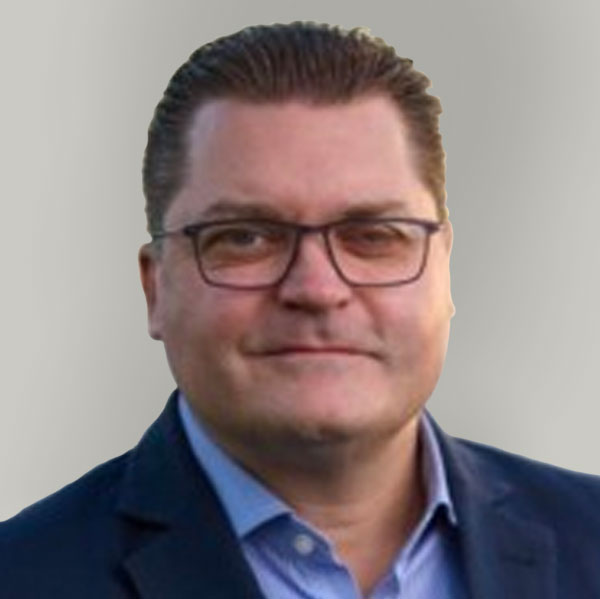
This week, Jack Sharry talks with Alois Pirker, Founder & CEO of Pirker Partners. For 25 years, Alois has worked with many leading wealth management firms and providers globally. Today, he advises firms, vendors, and investors on where the industry is headed, grounded in real conversation, real data, and real-world execution.
Alois talks with Jack about how firms navigate the convergence of AI, operations, and business model transformation. They discuss the gap between AI hype and practical implementation, why data management is the key to successful AI implementation, and how firms are moving from siloed, product-focused models toward holistic advice.
What Alois has to say
“Organic growth starts with trust. It starts with the trust the advisor or the firm has earned with the client or prospect. And that cannot be manufactured through technology.”
Read the full transcript
Jack Sharry: Hello everyone, and welcome to this week’s edition of WealthTech on Deck. As an avid reader of the daily industry news and a longtime observer of emerging trends in our business, it feels like things are really heating up—accelerating, in fact—across wealth management and asset management, including both public and private markets. There’s a lot happening in fintech and wealth tech, with a clear emphasis on convergence—pulling it all together. Firms are recognizing they need to create comprehensive platforms to stay competitive—ecosystems that deliver improved financial outcomes for investors, advisors, and firms. And while it’s clear to me and to firms leading the way, there is no silver bullet. I hear from many consultants that executives are searching for that one thing that will deliver immediate results. Those of us who’ve been at this for a while know it’s never just one thing—it’s a combination of operational realities behind modern tech stacks, advisor productivity and capacity, artificial intelligence at both the enterprise and advisor-desktop level, and—perhaps most importantly—how to generate meaningful organic growth. Our industry is grappling with all of this and more. That’s why I’ve invited today’s guest—someone who works with startups, ecosystem builders, and top executives who are the ultimate decision-makers. He’s in conversation with leaders across the industry. Please welcome Alois Pirker to WealthTech on Deck. Alois is the Founder and CEO of Pirker Partners, an independent wealth management research and strategy consulting firm. Over the past 25-plus years, he has worked with many of the world’s leading wealth management firms and wealth tech providers, including a long tenure as a research director covering wealth management technology. Today, Alois advises firms, vendors, and investors on where the industry is truly headed—grounded in real conversations, real data, and real-world execution. Alois, welcome to WealthTech on Deck. It’s great to have you here.
Alois Pirker: Jack, thanks so much for having me. I really appreciate it.
Jack Sharry: Let’s set the table. There’s a lot of noise right now—especially around AI, advisor efficiency, and next-generation platforms. From your vantage point, talking with firms and vendors every day, what are the real questions people are asking? And which of those questions actually matter?
Alois Pirker: The noise is warranted. The industry is experiencing significant change on multiple levels. We’re seeing business model shifts, expanding product lineups, and, of course, rapid technology evolution. Whenever this level of change occurs, firms feel pressure to act quickly—often out of concern that competitors are moving ahead. But wealth management isn’t uniform. It’s made up of many sub-segments—wirehouses, RIAs, independent broker-dealers, bank wealth management, trust businesses—and the challenges vary by segment. What’s consistent is that every layer of these firms is changing at once, which creates real uncertainty.
Jack Sharry: Let’s talk about AI. It’s everywhere. What’s materially different today compared with prior waves of intelligent automation? Are firms actually making progress, or is this mostly rebranding of existing tools? Are advisors feeling the impact yet?
Alois Pirker: The real difference is the intelligence layer ahead of the automation. We’ve had automation for decades—robotic process automation, workflows—but not true intelligence at scale. Intelligence requires data, and the quality and structure of that data is what creates real lift.
Firms have been good at managing data needed for transactions and operations, but far less effective at managing client data horizontally across the relationship. That’s where the biggest opportunity lies—if the data is well organized. There’s a misconception that a silver bullet is coming to solve everything. In reality, success will come from a combination of disciplined data management, strong governance, and intelligent layers built on top. Data is the foundation, and the industry is still figuring out how to do this well.
Jack Sharry: My sense—because I’m paying close attention to AI myself and using it daily—is that it represents a new way of thinking. At a personal level and in a business context, I find it helps me sort through complexity, especially around strategy and communication. But that’s very different from implementing AI at scale inside a firm. There’s the infrastructure layer beneath it, which is really what you’re referring to. Firms need clean, usable data and strong underpinnings to make AI part of their offering. You mentioned earlier that firms tend to know a lot about execution data, but not nearly as much about client data. That feels like a major opportunity. Can you talk more about that?
Alois Pirker: I think we’re seeing two levels of AI right now. On one side, there are point solutions—meeting note takers are a good example. They’re easy wins. You turn them on, advisors feel a productivity lift, and everyone says, “We’re using AI.” But are these tools truly changing how firms do business? Not really. They create efficiency, but the real transformation starts when firms organize themselves around AI at an enterprise level. When you examine how firms are structured, you see layers—custody, accounting, products, advisors. Those layers aren’t going away. There’s an assumption that everything will suddenly change radically, but much of how firms operate is shaped by regulation and long‑standing processes. What’s more likely is that intelligent overlay layers will emerge—fed by data from existing platforms—to help advisors connect dots more effectively. This reminds me of when firms tried to build their own digital portals. Eventually, those experiences depended on APIs to connect underlying systems. AI will evolve in much the same way. The systems stay, but we plug them into an intelligence layer. That requires data to be organized horizontally—and that’s hard. A good example is what firms like Aventos are doing with knowledge graphs. They’re not replacing core data systems; they’re organizing data in ways that create efficiency for advisors. Over time, AI will become part of every layer of the stack, just like relational databases or object‑oriented frameworks did before. That said, some legacy vendors may face disruption if they don’t adapt. It’s difficult to evolve systems that support hundreds or thousands of clients into an entirely new paradigm. That’s a major technology challenge.
Jack Sharry: That resonates. It seems like this is all part of a learning process. Many senior leaders are looking for a quick hit—maybe AI will magically pull everything together. But underneath AI, the infrastructure still matters. And wealth management systems were largely built around single accounts and single products. Now we’re talking about convergence—asset allocation, asset location, income generation, householding. If the infrastructure beneath AI doesn’t support those connections, AI can’t fix it. I often hear executives ask whether AI can just “solve” this. What would you say to that?
Alois Pirker: AI can only do what it’s taught to do. That teaching happens through data, trial and error, and refinement. On its own, AI isn’t smart. It becomes useful when data is well organized and processes are clearly defined. We also need to be careful. AI can be efficient, but it can also be wrong. I recently looked up a firm and was told—by AI—that it used both W‑2 and 1099 advisor models. When I spoke to the firm directly, they said they only use W‑2s. That’s a problem. In wealth management, advisors have fiduciary responsibility. You cannot rely on unvetted outputs. That’s risky. If data is well structured and used intelligently, advisors gain tremendous leverage—but discipline, governance, and process matter just as much as technology. AI is also expensive. Using it indiscriminately for mundane tasks can be very costly. The real value comes from marrying traditional methods with intelligent ones. That’s the secret sauce. Firms need to think about function first—what journey they want to be on from a business and product perspective—and then put the right tools in place to support that vision.
Jack Sharry: Let’s shift gears slightly. Organic growth is always the goal, but execution is hard. From your research, what’s really holding firms and advisors back? Is it technology, workflow, or business model? Are firms removing friction—or just adding more tools?
Alois Pirker: Organic growth starts with trust. It can’t be manufactured by technology. Growth happens when clients trust advisors enough to refer them. That’s still the core of wealth management. There are digital platforms that work through network effects, but wealth management is different. Clients entrust their livelihoods to advisors. That requires human trust. Good advisors on the front line are essential. On the operational side, firms are still highly siloed. I once asked a large bank how they decide whether someone becomes a trust client or a brokerage client. The answer was, “It depends on which door they walk into.” That’s not needs‑based—it’s organizational convenience. Clients feel that fragmentation. They wonder whether they’re getting the best solution—or just the solution the advisor is most comfortable selling.
Jack Sharry: One example I often point to is Morgan Stanley. They’ve been very open about their strategy—it’s not secret sauce, it’s execution. They’ve invested heavily in ecosystems that support advisors, enabled through AI and virtual engagement tools to reduce friction and operational burden. And they focus relentlessly on execution. You do a lot of work with vendors. Where are vendors doing better today than five years ago—and where are they still falling short?
Alois Pirker: Vendors have improved, but we’ve also seen a lot of land‑grab behavior—acquisitions without a clear strategic vision. Many vendors claim they can do everything, but the best ones know where they truly excel. Strong ecosystem partnerships have improved significantly over the last five years, and AI helps with integration. But vendors must understand their position in the value chain. Mastering certain data layers creates stickiness—but firms need to be intentional about which data elements truly matter. Looking ahead, vendors must pay attention to changing consumption patterns. Many are launching parallel “AI platforms” to signal innovation, but that doesn’t solve legacy system constraints. Another challenge is firms chasing market segments without fully understanding them. For example, many vendors want to move from enterprise into the RIA market. But RIAs operate very differently. Without adapting to those realities, vendors risk losing relevance with their core clients while failing to win new ones.
Jack Sharry: Before we wrap up, I want to skip ahead to my favorite question. When you’re not thinking about wealth management, technology, or the future of advice—what do you do outside of work for fun?
Alois Pirker: I’m actually a farmer. I own a farm in Austria that’s been in my family for over 100 years. We grow several crops, but pumpkins are the most distinctive—we produce pumpkin seed oil. It’s a generational responsibility. It’s work, but it’s incredibly rewarding.
Jack Sharry: You’re officially the first farmer we’ve had on the podcast. Alois, this has been a great conversation. Thanks so much for joining us, and thanks to our audience for tuning in to WealthTech on Deck. If you enjoyed the episode, please rate, review, subscribe, and share. Visit wealthtechondeck.com for all episodes and curated industry content.
Alois Pirker: Thanks so much for having me.