Why Advisor Capacity Is the Future of Growth with Steve Gresham
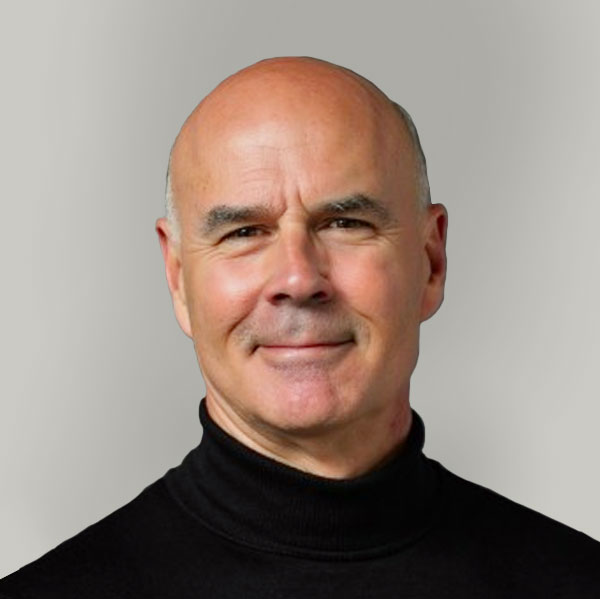
This week, Jack Sharry talks with Steve Gresham, Founder and Managing Principal at NextChapter. With more than 40 years in asset and wealth management, Steve has spent his career working on growth issues as an executive and as an advisor to executives. He has also played a key role in developing major industry innovations, including managed accounts, target-date funds, wealth strategies, and practice management.
Steve talks with Jack about why advisor capacity is becoming the defining driver of enterprise value. He discusses how firms can build their enterprise value through four key levers—headquarters-led capabilities, hybrid tech and human delivery, retention, and client acquisition. Steve further explores why advisory capacity is the new growth currency in wealth management and how AI accelerates this shift.
What Steve has to say
“You have to be able to tie AI into what is already an ongoing digital and information revolution. AI is riding on those same rails. It is accelerating the speed of the train, but it’s still primarily leading to a human-led advice industry.”
Read the full transcript
Jack Sharry: Hello everyone. Thanks for joining us for this week’s edition of WealthTech on Deck. Welcome. We’ve focused on organic growth in most of our episodes this year, but while it’s clear that many wealth and asset management leaders identify organic growth as their top priority, there seems to be a shortage of actionable strategies. I frequently speak offline with industry leaders who are grappling with this challenge, and very few, in my estimation, have identified what those actionable strategies might be. Perhaps no one understands this better than my longtime friend and colleague, Steve Gresham. Steve has gone beyond organic growth and makes a compelling case for the need to prioritize and build enterprise value. We’ll get into those distinctions in a moment. In today’s episode, Steve will cover strategies for both organic growth for wealth and asset managers, as well as ways to maximize enterprise value. Welcome back to WealthTech on Deck, Steve. Great to be chatting about something you and I talk about often.
Steve Gresham: It’s an honor, Jack. The podcast has really grown, and that’s a credit to you.
Jack Sharry: Thank you. I think it has more to do with guests like you. Let’s get into it. You’ve had a remarkable career leading some of the largest and most forward-thinking organizations in our industry. For those who may not be familiar, can you share a few highlights that shaped your perspective on organic growth and enterprise value?
Steve Gresham: Sure. I’d describe myself as a bit of a one-trick pony, but over 40-plus years I’ve moved through a number of roles—from analyst to portfolio manager to wealth manager, then into headquarters roles building managed account programs. I also moved between asset management and distribution. Later in my career, I was involved in the turnaround of the Phoenix Companies and then led retail strategy at Fidelity Investments from 2009 through 2017. That was probably the most fun I’ve had professionally.
Jack Sharry: And during that time, you saw some eye-popping growth. Can you talk about the numbers?
Steve Gresham: At Fidelity, we had excellent timing—coming out of the financial crisis when markets were low in early 2009. Clients were looking for help, particularly as they aged, and we leaned into a relationship-driven strategy that hadn’t been fully deployed before. We also expanded beyond purely human interaction to combine technology and human advice—what people now call hybrid. That helped us grow from about $700 billion to $3.5 trillion, and now it’s closer to $7 trillion.
Jack Sharry: Let’s define organic growth. How do you think about it, and what are the key levers?
Steve Gresham: Organic growth is fundamentally about the health of the business. It comes down to retention and acquisition—how well you keep clients and how effectively you attract new ones. In my experience, there are four levers. First, process improvements at headquarters—things that don’t require advisors. Second, hybrid capabilities that combine digital tools with human validation. Third, client retention, which is arguably the most important. And fourth, new client acquisition, which is the most difficult.
Jack Sharry: How does that connect to enterprise value?
Steve Gresham: Enterprise value is what a sophisticated buyer would pay for your business. It reflects the quality and scalability of what you’ve built. It’s not just about growth—it’s about how durable and repeatable that growth is. You might be acquiring clients, but are you doing it sustainably? Are you delivering an experience that retains them? Those are the questions that ultimately determine enterprise value.
Jack Sharry: So how do firms move from concept to execution?
Steve Gresham: It starts with clarity. You have to define where you’re going. Then you evaluate each lever: where can you make real progress? Client retention is often the most critical place to start. What will keep your best clients with you? What got them to this point, and how do you build on that? From there, pace becomes essential. Organizations need to make decisions and keep moving. Progress requires both direction and momentum.
Jack Sharry: Let’s talk about AI. Everyone is treating it as the answer to everything. How should leaders think about it?
Steve Gresham: AI is creating enormous potential, but it also risks widening gaps between firms. Some are leapfrogging ahead, while others are still figuring out basic digital capabilities. The CEO’s job is to ensure alignment across the organization. You can’t allow innovation to outpace the rest of the firm to the point where execution breaks down.
Jack Sharry: There’s also a lot of complexity and inefficiency in how firms operate today.
Steve Gresham: Absolutely. That’s where what I call “level one” improvements come in—things like revenue management and operational efficiency. They’re not glamorous, but they create the foundation for everything else. If you clean up those inefficiencies, you gain transparency. That allows you to identify pricing opportunities, improve margins, and better support clients—all without immediately relying on advisors.
Jack Sharry: So, what does the firm of the future look like?
Steve Gresham: The successful firm will build around its strongest core—its advisors, its culture, its client relationships—and then expand capabilities around that. It will move beyond a model driven by investments and sales into a fully optimized business focused on delivering value to clients.
Jack Sharry: That’s a great place to wrap. But before we do, my favorite question—what do you enjoy outside of work?
Steve Gresham: I’ve spent a lot of time in my woodshop over the years, though that’s on pause right now. I’m focused on figuring out where the next chapter of life takes us—where we’ll live and how to stay connected to family scattered across different places.
Jack Sharry: That’s something a lot of people can relate to. Steve, thanks as always—this has been a terrific conversation. For our audience, thank you for tuning in. If you’ve enjoyed the podcast, please rate, review, subscribe, and share WealthTech on Deck. You can find us wherever you listen to podcasts and at wealthtechondeck.com, where all our episodes and curated industry content are available. Steve, thanks again. This was a lot of fun.
Steve Gresham: Thanks, Jack. It’s been a pleasure.