Why Tax-Smart Infrastructure Is the Future of Wealth Management with Arthur Worthington
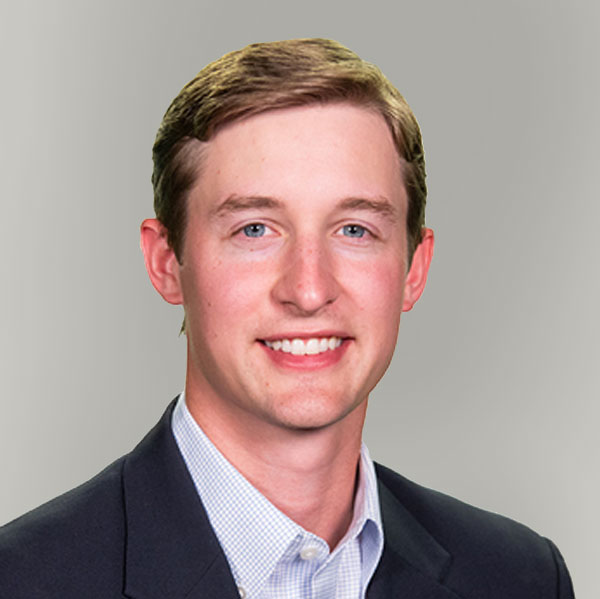
This week, Jack Sharry talks with Arthur Worthington, Managing Director of Strategic Business Development & Integration at SEI. With more than a decade of experience working directly with financial advisors, Arthur brings a rare blend of investment, technology, operations, and distribution expertise. In his current role, he leads the integration of major acquisitions—including LifeYield and Stratos—focused on helping wealth management firms scale, improve after-tax outcomes, and move from account-level to household-level implementation.
Jack and Arthur examine why organic growth remains elusive for most wealth management firms—even amid the largest wealth transfer in history. Arthur explains how household-level investing, asset location, and tax-aware withdrawals can unlock meaningful after-tax value for clients while driving retention, consolidation, and enterprise growth for firms. They explore the rising complexity of advice, the shrinking supply of advisors, and why scalable infrastructure—not just AI—will define the next generation of successful advisory businesses.
What Arthur has to say
“Financial planning is a huge part of the industry. Leaning into tax management as a differentiator is a durable way to differentiate their service in the market.”
Read the full transcript
Jack Sharry: Hello everyone and welcome. Thank you for joining us for this week’s edition of WealthTech on Deck. For over four and a half years, our podcast has explored the evolving landscape of financial advice. We’ve featured insightful leaders from asset and wealth management, banking, insurance, retirement, as well as technology and operations, all looking around the corner at what’s next for the industry. Our discussions often highlight how these thinkers are shaping the intersection of digital and human advice. Today we’re joined by Arthur Worthington, who I believe truly represents the industry’s future direction. Arthur brings deep expertise from years of working closely with financial advisors and understanding their unique challenges. Recently he transitioned into an executive role, collaborating across multiple disciplines with a diverse array of colleagues and industry partners to help build the platform of the future. As managing director at SEI, Arthur oversees strategic business development and integration. He’s currently managing two major integrations for SEI, bringing together Stratos, a prominent hybrid RIA and broker dealer recently acquired by SEI and leading the integration of LifeYield, my former company, which was acquired by SEI about a year ago. Incorporating LifeYield’s unique capabilities is an important contributor to SEI’s strategy of enabling banks, wealth and asset managers, insurance and annuity providers, and technology firms to move from account level to household level, UMH level implementation, helping firms scale and deliver better after-tax results. In a moment, Arthur will share his insights, but from my decades of experience, few can match his ability to assimilate investments, operations, technology, and distribution so effectively for the benefit of clients, advisors, and firms. Arthur, welcome to WealthTech on Deck. Great to have you here.
Arthur Worthington: Jack, thank you. Excited to be here.
Jack Sharry: So Arthur, let’s start with you talking about your role in working across SEI and the industry to bring together the capabilities that help advisors and their firms grow organically and build their business to better serve clients.
Arthur Worthington: Yeah, thanks, Jack. I’m a 12-and-a-half-year veteran of SEI. It’s amazing to me looking back that it’s been that long. It feels like it’s been just a couple of years. I guess that’s what happens when you run fast. But 10 and a half years really working in our advisor business. So what that meant was taking SEI’s services across custody, technology, investments, our deep experience supporting financial advisors, taking that out into the field, into financial advisory firms and helping them really scale, grow, and differentiate their practices. That was an amazing 10 years. I’ve learned a tremendous amount, not only about myself, but more importantly about really how to impact financial advisors’ practices to grow and scale. About two years ago, a leadership team approached me and said, hey, we’re interested in making more acquisitions. We’d love to have you be part of the team. So really the last two years has been focused on helping SEI acquire, integrate, and grow really two major firms. You mentioned both of them. SEI LifeYield, an amazing and talented group of professionals in Boston and of course a very recent announcement around Stratos. Very early innings there but tremendously excited about the potential that really both organizations bring to the SEI portfolio.
Jack Sharry: That’s great. You recently gave a keynote presentation at Bob Veres’ Insider Forum where you addressed some of the key issues financial advisors and firms face as they look to build efficient and effective businesses. So I’ve seen the deck and you make a variety of compelling arguments. Why don’t you fill us in on what you covered?
Arthur Worthington: Yeah, it was a really fun event, as always, great audience, and really nice way to sort of share what we’re seeing. And I think it comes down to a couple of sort of key trends that are taking place in the industry. But one that continues to stubbornly not go away is firms are seeking ways to drive organic growth. If you look at all the numbers, it’s sort of a sad statistic. But really, 70% of the growth in our industry over the last decade has been market-driven, not organic growth-driven.1 And so if you look at the 30% that actually is organic growth, there’s actually a really interesting story that emerges. 75% of that 30% is really owned and dominated by just 6% of the firms in the total industry. So said another way, 94% of our industry controls just a very small sliver, less than 8% of the total growth taking place. And so that begs the question, one, why? And for those advisors that maybe aren’t getting the organic growth that they’re looking for, what should and could they be doing to differentiate and to create scale to, again, create organic growth? So, a lot there we can certainly unpack. I think what also is emerging is while this struggle to find organic growth exists, we’re also sitting on the greatest opportunity for wealth management firms really ever, which is the great wealth transfer. So it’s highly talked about. I won’t go in depth about it, but there’s statistics, $170 trillion are going to transition between now and I think 2045. You have baby boomers, what, 10,000 boomers hit the age of 65 every day. Every boomer is going to be over the age of retirement by 2030.2 So there’s this giant pool of opportunity that exists for financial advisors to really turn that tide and find ways to grow organically. I think what’s also interesting about this, Jack, is with boomers retiring, there’s going to be an increased demand for quality financial advice. And so when you think about the need for quality financial advice, and then the other side, which is a lot of financial advisors are boomers themselves. And so if you look at the average age of a financial advisor in our industry, it’s right around 60. Look at the average age of retirement, it’s right around 68. So really over the next 10 years, we’d go from, call it 290-300,000 advisors in the industry. We expect roughly 100,000 or so to exit the business. And so again, there’s two major trends that emerge out of that. One is advisors of the future are going to have to serve way more clients than they do today, maybe two or three X that. And so what’s the technology, what’s the infrastructure that’s going to facilitate advisors of the future to serve more? We’re going to talk about technology, I’m sure. That’s certainly going to be big part. But the other side of this, which is really interesting, is the demand and supply. So demand for advice is going up. The supply, number of advisors being able to deliver advice is going down. And that creates pricing power. And why we’re seeing financial advisory fees remain strong compared to custody and technology fees, and also probably a big contributor or maybe a good stopping point around asset consolidation and really consolidation in the wealth space. So the private equity money pouring into the space, the consolidation and the roll ups that are taking place. There’s just an enormous amount of activity, which is again, exciting to see. It creates a lot of great headlines. But again, 284 deals in 23, I think close to 330 some in 2024, over 400 expected in 2025.3 So there’s just a lot taking place in our industry that all points back to firms are trying to solve real macro level challenges, how to grow organically, how to create scale, how to solve the advisors leaving and succession planning. And that is where technology we believe will play a big part of it. So you asked about the Veres presentation, really at the core of it is today firms create and build technology infrastructure and then integrate those pieces one to one. The future is really taking those, creating a unified data structure, and then creating where you can organic, agentic workflows that dynamically move data, create real scale. And so that is again, one of the many ways that we’re looking at the future is how do we create scale and efficiencies for financial advisors to solve these real challenges.
Jack Sharry: The recipe of more people moving into retirement with more complex and different issues than they may have had prior to retirement, you have fewer advisors to serve them. The complexity has only gone up, it has not gone down. And while AI will play a role, we’ll probably talk about that, it’s not the answer because it’s ultimately, I think we both agree, it’s about that human interaction to understand what the issues are.
Arthur Worthington: 100%.
Jack Sharry: And so, we’ll talk some more about that. But really what we’ve talked about so far is the dynamics of running the business. Now let’s talk about the future of investing, because given all the complexity we just highlighted, how does it come together with running a business, that future of investing piece? There are so many factors to be considered. There’s financial planning, product selection that will include both public and private markets, asset allocation and risk management, taxes across the multiple product types and account registrations and generating tax smart income, especially in retirement. So, as you well know, running an advisory business has gotten a lot more complicated and getting more so. So please share with our audience some of the things you’re working on.
Arthur Worthington: Yeah, so I think there’s two sides of the coin, right? The first is you got to have the right technology and infrastructure to be able to serve clients well. And that’s, again, having the right technology, the right integrations, the right processes outlined. But then when it comes to actually delivering advice, there’s sort of core parts of it that need to be done well. I think one of the really positive trends we’ve seen in the industry is the adoption of financial planning. So we’ve seen, I think, close to over 60% of advisors now are leveraging financial planning tools. They’re going through financial planning process. So that creates a higher quality level of advice being offered in the marketplace. Ironically though, when you think about our industry, we give financial planning advice holistically at the household level. We collect information about that household, their goals, their ambitions. We do risk, we do asset allocation designing. But once they finish that plan, we have this odd dynamic where we then require the financial advisor to deconstruct that financial plan and go implement it account by account. So they literally take a household financial plan, deconstruct it into the account level, and then go execute it to various custodians, account by account. And then when it comes to review meeting, they’re then tasked with re-taking all the components and messaging that back up at the household level. And so, there’s a disconnect. And there’s an opportunity there that we really believe can be solved. And that was part of our thesis behind the acquisition of LifeYield, which is really, how can we move account level implementation to household level implementation to be closer to that household level planning that exists in the marketplace.
Jack Sharry: Talk a little bit more about this thing… a theme that’s emerging here is complexity, and it only gets more so. And particularly when you consider taxes, back in the day, early on, the advice was to have the same allocation in your qualified account as in your non-qualified account, which as we’ve all come to learn is not a recipe for success. So, talk about that dynamic and some of the things that you’re doing around tax optimization in particular. What is it that you’re doing to bridge the gap between the financial planning exercise, deconstructing it and then reconstructing it. I know there’s a more seamless way to do it and I know you’re working on it.
Arthur Worthington: Yeah, there’s… so tax can be a broad envelope. And I think you really can’t see a headline today without seeing things like 351 exchange direct indexing. There’s a whole lot out there. But when it comes down to just the core issues that you’re trying to solve, the number one expense for households with income over $200,000 is tax.4 So if we collectively can help advisors ultimately help investors solve that key pain point, we know we can create a differentiated service and a valuable service for their investors. So what are we doing? What are we building? We’re really trying to take core components. So one, giving advisors the tools to see all their accounts in one place. That’s sort of generic. Most of the industry has that. But once you have that plan and once you want to implement it, it’s really giving you the tools to be able to locate the component pieces in the most optimal account registration type to maximize the after-tax return, not across the one account, but across the entire household. And so that concept is really known as asset location. And it’s not doing it via some manual preference setting. It’s doing it dynamically with an algorithm that’s gonna adjust based on the client’s unique tax situation and budget. And then once that is in place and you have sort of the ideal profile, a lot of times you gotta get from point A to point B. And so that means transitioning. And there’s a lot of tools out in the marketplace that do single account transitions. But the goal here again is to operate at the household level. So, it’s introducing technology and services that can help advisors or enterprise firms move assets in bulk at the household level from the existing portfolios into the newly designed portfolios and do so at scale. And then certainly things like tax loss harvesting, getting withdrawals out in the most optimized ways, those are critical as well. But ultimately, all of these sophisticated tools need to coordinate and work together and be able to rise up to that household level way and have a simple way for an advisor to communicate to the investor, this is how much money we’ve saved you by applying these techniques to your portfolio. And that needs to be both in dollars and in percentage in order for the investor to both understand in real terms how much they’ve saved, but also to contextualize what this means relative to the fee that their financial advisor is charging them. So, what are we focused on? Creating these household capabilities, unified managed households, and bring it dynamically to market to allow advisors to differentiate.
Jack Sharry: Let’s talk about that because what you just described sounds so easy because you’re rather eloquent in describing it. You know this stuff well. But frankly, talk about what I consider to be the most important thing that we do, which is to quantify the benefit in dollars and basis points. Talk about that dynamic because it’s hard for the client to understand. It’s hard for the advisor to explain. But if you put a dollar sign to it, it seems to be a lot easier for everyone to understand.
Arthur Worthington: Yeah, that’s exactly right. So, I think the simplest way to look at it is if you take a portfolio, say a 60-40 portfolio, and then you redesign that 60-40 across the household and just move the pieces around. Basically, what Ernst and Young’s research on the SEI LifeYield engines will tell you is you’re going to end up, via the accumulation, having less tax drag and more after-tax return, having 33% more income when it comes to retirement. And if you continue those practices through retirement, you’ll end up with 45% greater assets being passed on to the next generation.5 So that’s over a lifespan. When you engage with an investor, every time you have that touch point, you need to be able to articulate the value of what you’re doing and how it’s created. We’ve had at SEI tremendous value using what’s called an estimated tax save report, just to quantify tax loss harvesting and spin up the value of it, again, in dollars and basis points. So when we apply these things like asset location and multi-account rebalancing and tax transition and tax harvesting, we need to go in and quantify and we can through the dynamic algorithms and engines that we’ve created here at SEI LifeYield to be able to put that tool in an advisor’s hands so they can elegantly and succinctly communicate, this is how much we’ve saved you from all the great things and tax work that we’re doing. And this is why you should continue to work with us. And quite frankly, little tongue in cheek here, Jack, why you should refer more of your friends and families to us to help solve their problems.
Jack Sharry: Love it. So let’s talk about this organic growth thing we’ve been talking about, because you just hit on something that… I’m underscoring the obvious but it’s sometimes gets missed because of all the moving parts that we’re describing. But basically what you can do if you are showing how much more money you’ll have, you said a third more income over time. If you have that much more money, what about those other accounts that are held at other places and what about pulling them together in one place, getting the benefits. So talk about the benefits of asset retention, asset location, and then I’ll save the next question, which is about fees for later. But why don’t you just talk about, just that dynamic where people have more money from which to draw and ultimately have more money to spend in retirement.
Arthur Worthington: Yeah, so this actually goes back to the theme around the Bob Veres presentation, which was firms are struggling with organic growth. And so what can we as a provider and partner firm of financial advisors deliver to help drive organic growth? And so one of the things that we’ve seen in real is when investors bring all their accounts to an advisor, they’re oftentimes in many different places. And sometimes there’s more than one advisor at the table. And so if we can package those up and show the value that, hey, if you actually manage all of these dislocated accounts as one, under one coordinated approach, they can live in different accounts, but in a truly coordinated fashion, we can show them how much more additional growth they should get over the next 10, 20, 30 years from consolidating and managing those together. And just by doing that, it creates a really tangible way to say, this is why you should consolidate your assets under one advisor because by doing so, we can get you another 20, 100,000, 200, a million dollars. Again, depends on the portfolio that’s coming to the table, but it creates really compelling reasons that investors should consolidate, which is ultimately how you can drive organic growth. If you can drive consolidation of assets to that financial advisor, you can help. So it’s quite amazing, we have a number of case studies. I’m sure your audience would be interested in going through that. Probably not for this podcast, but really amazing stories around how asset location can be used as a tool to drive organic growth.
Jack Sharry: We did a study, as you know, Arthur, and looked at the SEI book of business and what might happen if we applied the algorithm. There’s some pretty interesting numbers, not only in terms of the benefits to the client, but also the fees that the advisor earns. So talk a little bit about that if you would.
Arthur Worthington: Yeah, what I may do is break it into components and I think we’ll see the Venn diagram emerge here. Let’s start with asset location. We’ve talked a lot about it. There’s a lot of research out there in the marketplace. There’s Ernst & Young’s review, there’s Vanguard, there’s others, but up to 75 basis points of value can be created by asset location. Now some portfolios can far exceed that, but that might be your average, roughly 75 basis points. SEI, in our experience with tax loss harvesting, over the 20 plus years we’ve been doing it have averaged about 136 basis points of annual tax savings.6 Now that’s separate from asset location. And then the study that you’re referencing that we did most recently, we looked at a $100 billion book of business and we looked at withdrawal activity. And basically what we saw was that advisors oftentimes when they’re asked for a large quantity of distributions or just an average, they’ll go through the exercise of dumping those tax lots into Excel spreadsheets, manually trying to figure out what’s the best, most optimal way to do it, just not efficient. Now, good news was, their activity, we were able to identify, again, over a $100 billion book of business, was able to save about $63 million of annual savings when compared to a standard first-in, first-out methodology. But when we looked at the delta between what advisors were actually doing, and what the smart withdrawal capability at SEI LifeYield could do, there was another $100 million to be picked up.7 So in other words, there was $161 million delta between first in, first out methodology and an optimal withdrawal scenario. And so when you play that out over a decade and you create roughly $160 million of annual tax savings for your investors, what you really create in the process is close to $2 billion of enterprise value that’s been created by just solving tax smart withdrawals. And so we sort of chuckle about it, but we like to think of the value that we’re creating is really on three different levels, Jack. One, we’re fundamentally helping create better outcome for investors. We’re saving them tax dollars, tax dollars that would leave their accounts and no longer compound year after year after year. First and foremost, we’re creating a better outcome for investors. Two, by putting technology and services in the hands of advisors, we’re helping reduce the operational headaches that exist today while also giving them value-added tools and resources to better articulate their value and hopefully drive their organic growth. But then above that, you have these enterprises that these advisors roll up under. And by just improving asset location, you can create more accumulated growth over the next decade. And by improving withdrawals on the backend, which again, we got $170 trillion in motion between now and 2045. Optimizing withdrawals is going to be critical for the firms of the future. So again, by optimizing withdrawals, we can save, in the example I just gave you, close to $2 billion of enterprise value. So really what we’re talking about is investing in the future, it’s about creating outcomes on three different levels. How do we create a better experience for the investor with better after-tax return? How do we create more scaled solutions so advisors can offer the services they want to, but at higher scale so they can service more clients. And then ultimately, how can we create more enterprise value so that these roll up consolidated firms that are taking place are able to actually grow their book of business with less tax drag in the future and with less tax impact as the withdrawal activity ramps up over the next decade. Really interesting stuff.
Jack Sharry: Arthur, fabulous, wonderful to hear, all stuff I’m familiar with that you articulated so well. Why don’t you give our audience an update on how things stand in terms of the development of what you’re describing.
Arthur Worthington: Yeah, no, it’s really exciting to think back almost a year ago is when the acquisition was finalized. The early days were all about sort of core integration work. So how can we get LifeYield APIs integrated into SEI’s portfolio management tools? A number of those installations have occurred. We’ve got our asset location capabilities, multi-account rebalancing up and live, tax loss harvesting on a multi-account basis. We have additional ones that will come online in the early part of 26. So the core engine work is really on track and going smoothly. And then the exciting part is you might have a really great engine, but you want to put it in a really fast, cool car that’s going to go. And so we’re actually taking the effort to build a new user experience that advisors can come into to really help bring together some of the proposal aspects, some of the, again, compelling reasons that investors should consolidate to drive organic growth. So that’s both point of sale and also review meeting resources. We expect that the engine and the fancy sports car will come together to land in the second half of next year. I’m really excited to bring that to market.
Jack Sharry: That’s great. So I’ve been along for this ride you’re describing for 17 or so years, but who’s counting. And one of things that I’m most pleased about with the fact that we’ve landed at SEI is the wherewithal to put all this together and help in the operationalizing all that we’ve described, whether you’re a bank trust or you’re an enterprise, large national enterprise, or you’re an RIA, also doing some work with other channels within the wealth management space, asset management space. So Arthur, why don’t you talk a little bit about that operational aspect, because I think we often step over that as if that somehow magically happens. And as you well know, that’s fundamental to making this all work.
Arthur Worthington: Yeah. And again, we’ve talked about two different lenses. We had the first lens, which is just running a business, operationalizing a business is all about how do you create scale and systems so you can do consistent process time over time as you add more clients and complexity. So that’s where having the right infrastructure is really critical. From an investing standpoint, I’m going to narrow it, moving from single account to a household level approach, even with the great technology we’re building does add a layer of complexity. And so one of the things we’re being very conscious of is we want to advisors choice to meet them where they are. So if you’re an advisor that wants to push the buttons, be the portfolio manager, we’ll give you portfolio management tools with the capabilities to do this yourself. But we know many of you out there really just want to focus on servicing your clients, gathering assets, delivering high quality advice. And so we will offer a service which will really allow you to give us critical inputs, what’s your mass allocation, what are the investment managers I want to use, what’s my tax budget for my clients. And then turn over the day-to-day trading transition to SEI to deliver that service to your investors. And then again, you have the tools, i.e. reporting capabilities, to be able to take what’s happening and communicate that effectively to your advisory base. So operational is a key part of it. It’s all about how do you create the systems and scale to make it work.
Jack Sharry: Which I know you spend a whole lot of time with a whole lot of colleagues inside of SEI and outside to make that happen. So thank you for doing that. What’s being built is impressive. Anything that we should touch on before we say farewell for today?
Arthur Worthington: I’ll share a quick story. I was sitting in the back file or two at T3 in March and was listening to Amy Young at Microsoft at the time share a presentation around agentic workflows and the potential that’s created. And I was literally trying to follow along, build my own agent in the back of the room so I could understand the concept. There’s no doubt that the advancements of AI are going to have huge sweeping changes to our industry. I think I would deploy those leaders out there that are looking at how to leverage AI, where should we make…? It’s really around infrastructure. What are the core infrastructure investments that you can make, should be making in your business to really allow AI to maximize its potential? And then separately, but very much correlated, figure out where people can be deployed most successfully to sit alongside that agentic capability to maximize the potential of both. Because AI has a place. People have a place. And when you figure out the right infrastructure and the right lanes for those two to operate, the upside potential is enormous. And we’re spending a lot of time trying to figure that out right now at SEI. So that’s one side. The other side is, look, financial planning is a huge part of the industry. Tax can be a huge differentiator. We see a lot of commoditization from an investment standpoint. So again, moving from single to a multi account approach, leaning into tax management as a differentiator, again, we see as a durable way for financial advisors to differentiate their services in the market.
Jack Sharry: Love it. So great information, great conversation. Love this discussion. It’s kind of fun to do this as a podcast. We do this every day, just about. So as we look to wrap up, what are a few key takeaways you’d to share with our audience?
Arthur Worthington: Yeah, I think the key there is invest in your infrastructure, invest in your people, re-architect if you need to do it. Now’s the time, given again, the sweeping AI capabilities that are coming into the marketplace. And then look to partners. It’s really critical that when you’re trying to simplify the tech stack, simplify the vendors, finding the right partners that can offer more capabilities so that you can go deeper with that. Again, we at SEI believe we have some of the deepest capabilities in the industry across fund administration, wealth technology, custody, asset management. So for those firms that are out there that are looking for the right partner to sort of re-architect the infrastructure from a technology, from a fund administration, back office and middle office standpoint, and also just asset management, wealth capabilities, we’re a big player and would love to partner with those out there.
Jack Sharry: I’ll add one piece that we really didn’t get to, but it’s a critical piece given everything you’re reading about in the news. And SEI is the, was it the largest processor of private credit in the industry.8 So, with all the talk of alts, the combination of public and private is going to be critical. Taxes and risk and liquidity are key issues. I know we’re working on addressing those as part of an ability to manage both public and private if people… maybe you want to make a comment on that as well.
Arthur Worthington: Yeah, I mean, there’s no doubt there’s an explosion of interest in private markets. I think what we’re still seeing in the wealth space is there’s a lack of education on how to properly leverage private market investments in portfolios. So that’s, again, a lot of work that we’re doing right now is how can we educate advisors? How can we connect the huge number of asset managers that SEI supports from a fund administration side to the huge number of RIAs and wealth providers that we service on our custody and on TAMP business at SEI to again, raise awareness, create the proper portfolio structure to facilitate private market investing.
Jack Sharry: Lots going on, all good stuff. One last question, always our favorite. We do it with each of our podcasts. What do you do outside of work that you are excited or passionate about that people might find interesting or surprising?
Arthur Worthington: Yeah, Jack, you know this well from our time together, but a proud husband and father of two great kids. So, they keep me very busy. I also love cooking, so constantly cooking for all of them. But when I do get to get away from the family and enjoy, I’m a golf enthusiast, have been really my whole life, not just playing, and I do compete a little bit competitively still, but love sort of the architecture strategy side of golf course design too. So…
Jack Sharry: Oh, really? Interesting.
Arthur Worthington: One of many hobbies, never get enough time to do it, but certainly a passion of mine.
Jack Sharry: Yeah, I’ve watched you in action. You are as organized as they come. So if anyone could pull all that off, you are the one. Arthur, thanks. It’s a great conversation. For our audience, thank you for tuning in. If you’ve enjoyed our podcast, please rate, review, subscribe, and share what we are doing here at WealthTech on Deck. We’re available wherever you get your podcasts. You should also check us out at our dedicated website, wealthtechondeck.com. All our episodes are there along with blogs and curated content from many folks around the industry. Arthur, thanks a lot. It’s been a real pleasure.
Arthur Worthington: Jack, that was great. Thank you.
1 Firm revenue. Source: Tiburon CEO Summit, April 2023.
2 Cerulli Associates, U.S. High-Net-Worth and Ultra-High-Net-Worth Markets 2021. Tiburon Strategic Advisors, LLC™.
3 InvestmentNews, 2025 RIA M&A Sets New Yearly Record With More Deals on the Horizon (Jan. 2, 2025).
4 US Department of Labor, Bureau of Labor Statistics, Consumer Expenditure Survey, 2021.
5 Know The Score: An Independent Validation Of SEI LifeYield By E&Y, 2024.
6 As of November 2025. Parametric Portfolio Associates serves as tax overly manager for the Managed Account Solutions Composite presented herein. All equity tax managed accounts are included in the Composite. Accounts are included in their first full quarter of management. Accounts are excluded after their last full quarter of management. Terminated accounts are included for all full periods prior to termination. This Composite includes all taxable accounts that funded with cash, have no security restrictions, or fixed income securities. Composite returns are market-value weighted using beginning period values.
For after-tax improvement figures, composite performance is compared to the third-party active manager target portfolio performance on a pre-tax and after-tax basis solely to illustrate the under- or over-performance attributed to tax management. Both Composite and target performance include the reinvestment of dividends, income and other distributions but exclude transaction costs and advisory fees. The deduction of such fees and expenses would reduce returns equally for the Composite and target portfolio. The target portfolio performance is hypothetical; calculations do not reflect actual trading and may not reflect material economic or market factors that were considered when managing the Composite. Target portfolio returns do not take individual investor taxes into consideration.
Hypothetical performance results are generally prepared with the benefit of hindsight. Simulated trading does not involve financial risk and cannot completely account for the impact of financial risk in actual trading. For example, the ability to withstand losses or to adhere to a particular trading program in spite of trading losses are material points which can also adversely affect actual trading results. There are numerous other factors related to the markets in general or to the implementation of any specific trading program which cannot be fully accounted for in the preparation of hypothetical performance results and all of which can adversely affect actual trading results. Because there are no actual trading results against which to compare, investors should be particularly wary of placing undue reliance on these hypothetical results.
When calculating after-tax returns, Parametric applies the client’s individual tax rate, if provided by the client. Otherwise, Parametric applies the highest U.S. federal tax rates. The client’s tax rate may include federal and state income taxes or other custom rates. For short-term gains, the highest U.S. federal marginal income tax rate is 37% plus 3.8% net investment income tax, for a combined rate of 40.8%. For long-term gains, the highest U.S. capital gains tax rate is 20% plus 3.8% net investment income tax, for a combined rate of 23.8%. These assumed tax rates are applied to both net realized gains and losses in the portfolio. Investors’ actual tax rates, the presence of current or future capital loss carryforwards, and other investor tax circumstances will cause an investor’s actual after-tax performance to be over or under Parametric’s estimates presented here. In periods when net realized losses exceed net realized gains, applying the highest tax rates to their calculations illustrates the highest after-tax return that could be expected of the portfolio, and assumes the maximum potential tax benefit was derived. Actual client after-tax returns will vary. The after-tax performance reported here is an estimate. In particular, it has been assumed that the investor has, or will have sufficient capital gains from sources outside of this portfolio to fully offset any net capital losses realized, and any resulting tax benefit has been included in Parametric’s computation of after-tax performance.
Target after-tax returns are simulated for each client portfolio using client-specific, after-tax target portfolios. Performance of the after-tax target is simulated using the same inception date, cash flows, cost basis, and tax rates as the client portfolio. The after-tax target’s capital gain realization rate is based on the weighted average turnover rate of the combination of models allocated to by the client. The dividend income is estimated using the weighted average dividend return of the combination of models allocated to by the client during the period.
7 The score examines a portfolio of accounts to determine the after tax return the client can expect. It is based on a scale of 0-100 and uses information such as tax rates, asset categories, total return, interest yield, dividend yield and anticipated asset class turnover. A score of 100 indicates the household portfolio is optimally organized to minimize taxes. A lower score allows financial advisors to make portfolio adjustments that help clients minimize tax exposure. For illustrative purposes only. Does not constitute investment advice or recommendation. Source: SEI LifeYield engine output.
8 Preqin as of Jan. 31, 2024.
Tax and Tax Management Techniques Disclosures – SEI Investments Management Corporation (SIMC) does not represent in any manner that the tax consequences described as part of its tax-management techniques and strategies will be achieved or that any of SIMC’s tax-management techniques, or any of its products and/or services, will result in any particular tax consequence. The tax consequences of the tax-management techniques, including those intended to harvest tax losses, and other strategies that SIMC may pursue are complex and uncertain and may be challenged by the IRS. Neither SIMC nor its affiliates provide tax advice. Please note that (i) any discussion of U.S. tax matters contained in this communication cannot be used by you for the purpose of avoiding tax, penalties and/or interest which may be imposed by the IRS or any other taxing authority; (ii) this communication was written to support the promotion or marketing of the matters addressed herein; and (iii) you should seek advice based on your particular circumstances from an independent tax advisor. Accordingly, Clients should confer with their personal tax advisors regarding the tax consequences of investing with SIMC and engaging in the tax-management techniques described herein (including the described tax loss harvesting strategies) based on their particular circumstances. Clients and their personal tax advisors are responsible for how the transactions conducted in an account are reported to the IRS or any other taxing authority on the Client’s personal tax returns. SIMC assumes no responsibility for the tax consequences to any Client of any transaction. SIMC is a wholly owned subsidiary of SEI Investments Company.